
Palestinian sandgrass
Ammochloa palaestina
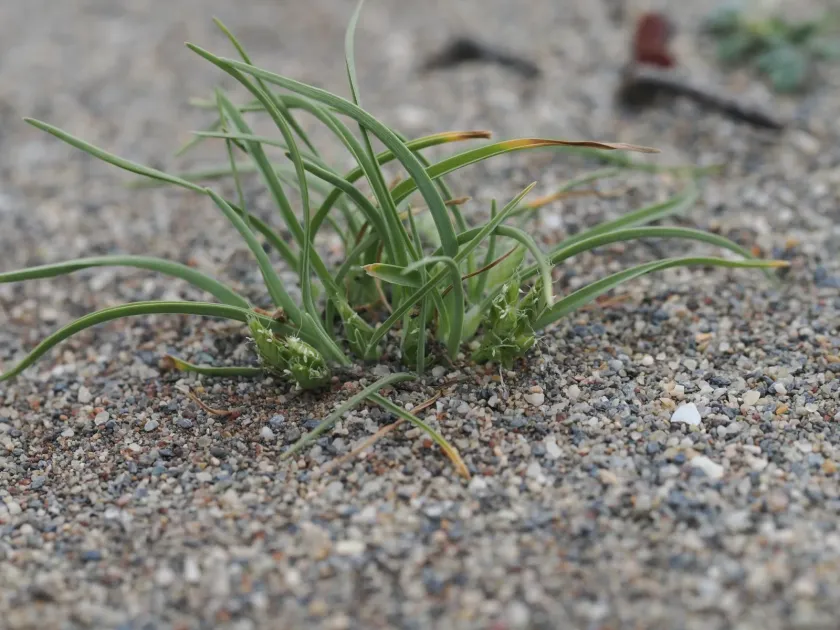
Description
Growing requirements
Palestinian sandgrass (Ammochloa palaestina) is an annual grass species belonging to the family Poaceae. It is a highly specialized plant native to the arid and semi-arid regions of the Middle East and parts of North Africa.
The botanical structure of this plant is designed for survival in harsh desert environments. It typically develops a compact habit, which minimizes transpiration and protects the sensitive growth points from extreme thermal stress during the day.
Regarding environmental needs, this species thrives in sandy, well-drained substrates. It requires a high level of solar radiation to complete its reproductive cycle and does not tolerate soil compaction or waterlogging, which can lead to rapid root mortality.
In terms of agricultural significance, Palestinian sandgrass is valued for its role in stabilizing dunes and preventing soil erosion in marginal lands. It serves as a primary source of forage for nomadic livestock during the brief spring season when green vegetation is available.
Management of this culture is limited to natural range protection rather than intensive cultivation. It demonstrates remarkable physiological plasticity, allowing it to adapt to varying moisture levels within its native range without human intervention or fertilization.