
Amethystea caerulea
Amethystea caerulea
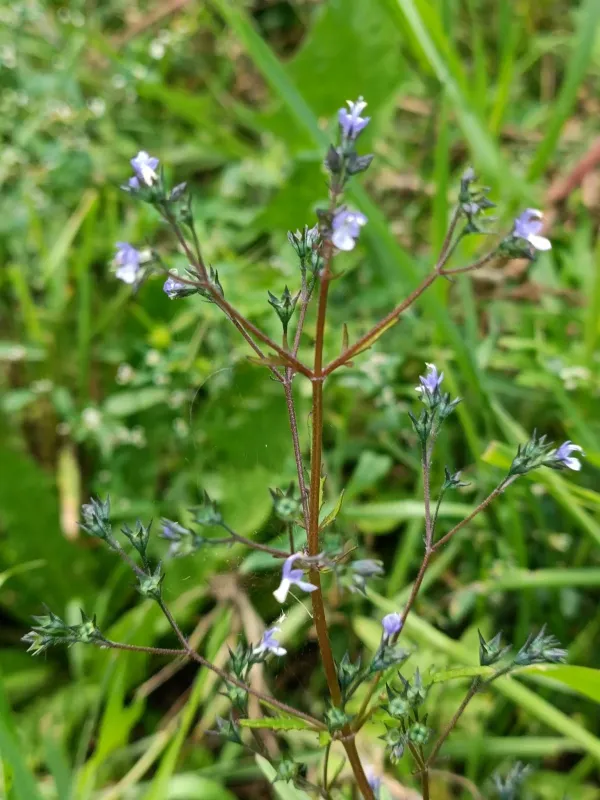
Description
Sowing dates
Amethystea caerulea is an annual herbaceous plant belonging to the Lamiaceae family, known for its distinct appearance and potential for cultivation as an ornamental or medicinal crop.
The sowing process typically begins in mid-spring, ensuring that the soil temperature is sufficiently warm to support rapid germination and initial seedling development.
Seeds should be sown in rows spaced approximately 30-40 cm apart to allow adequate space for lateral branching and airflow throughout the growing season.
As the seeds are relatively small, shallow planting at a depth of 0.5 to 1 cm is recommended, often followed by light compaction of the soil to ensure good seed-to-soil contact.
For regions with shorter growing seasons, starting the plants in a nursery and transplanting them after the last frost date can provide a significant advantage in biomass production.
Growing requirements
This crop thrives in sunny locations, as direct sunlight is essential for promoting dense foliage and the development of the characteristic blue-tinted flowers.
Well-drained, sandy loam soils with moderate fertility are ideal for Amethystea caerulea, as the plant is sensitive to waterlogging which can damage its root system.
Adequate weed management is crucial during the early stages of growth, as the young seedlings can easily be outcompeted by more aggressive field weeds.
Watering requirements are moderate; maintaining a consistent moisture level without creating saturated conditions is the key to preventing physiological disorders.
Regular monitoring of soil nutrient levels allows for targeted fertilization, primarily using phosphorus and potassium to enhance overall plant hardiness and maturity.
Main diseases and pests
Fungal pathogens such as root rot and powdery mildew represent the primary biological threats to Amethystea caerulea, especially in environments with poor air circulation.
To mitigate these risks, crop rotation is highly recommended, avoiding the planting of Lamiaceae species in the same plot for consecutive growing cycles.
Pests like aphids and spider mites can infest the crop, potentially reducing leaf quality and slowing the overall development of the plant's aerial parts.
Integrated pest management strategies, including the use of biological controls or mild botanical insecticides, are preferred to maintain the quality of the harvested material.
Proper field hygiene, such as the removal of crop residues after harvest, helps to break the cycle of pathogens and insect pests for the subsequent season.
Harvesting
The harvest of Amethystea caerulea is performed during the peak flowering stage to capture the highest concentration of phytochemicals and aromatic oils.
Mechanical harvesting or manual cutting is executed above the base of the stem, ensuring the gathered material remains clean and free from soil debris.
Immediately after cutting, the biomass must be moved to a drying facility, protected from direct sunlight to preserve the color and chemical integrity of the crop.
Drying is conducted in a well-ventilated space at controlled temperatures, typically below 40 degrees Celsius, to prevent the volatile compounds from degrading.
Once dried to the appropriate moisture content, the final product is sorted and packaged to be stored in cool, dark conditions prior to commercial or medicinal application.