
Century plant
Agave americana L.
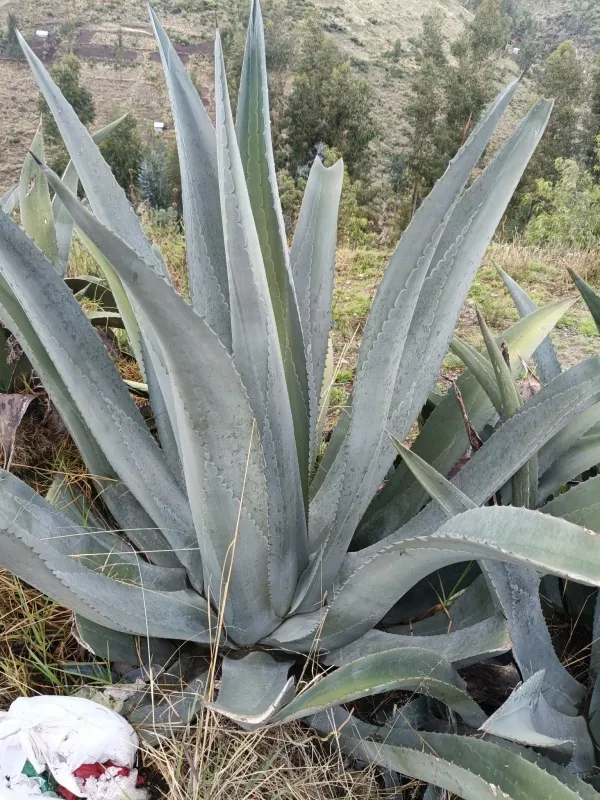
Description
Growing requirements
The Century plant (Agave americana L.) belongs to the Asparagaceae family. It is a robust, succulent perennial famous for its large, fibrous leaves that form a dense rosette and provide vital industrial materials.
Native to the arid regions of Mexico and the southern United States, this plant is perfectly adapted to desert environments. It utilizes specialized metabolism to conserve water and endure prolonged dry spells.
The crop requires sandy, well-draining soil to thrive. It cannot tolerate waterlogged conditions, which lead to root rot and systemic plant failure, making site selection critical for commercial farming.
Optimal growth occurs in full sun exposure. While the plant can withstand slight temperature fluctuations, it is essentially a subtropical crop that requires warmth for vigorous vegetative development.
The plant has a unique life cycle, often living for many years before producing a massive, tower-like inflorescence. After flowering and setting seed, the parent plant dies, usually replaced by basal offshoots.
Yield
The primary economic value of Agave americana lies in its strong, coarse fibers, known as sisal or henequen, which are widely used in textiles, cordage, and specialized construction materials.
Harvesting involves cutting mature leaves from the outer part of the rosette. Proper technique is essential to allow the plant to continue growing while maximizing the yield per hectare.
Processing plants utilize decortication machines to separate the fiber from the succulent leaf pulp. The extracted fiber must be cleaned and dried immediately to prevent fungal stains.
The plant is also utilized in the production of agave nectar and traditional fermented beverages, showcasing its versatility as a multifunctional agricultural crop.
Farmers focus on optimizing planting density to achieve a steady annual yield, ensuring that the labor-intensive harvest cycle remains profitable over the plant's long lifespan.
Main diseases and pests
Agave snout weevils are the most significant pest, as they burrow into the base of the plant, causing total collapse. Regular monitoring is necessary to prevent large-scale infestation.
Fungal diseases, such as leaf spot and basal rot, often occur in plantations with poor air circulation or excessive soil moisture, particularly during the rainy season.
Effective management strategies include maintaining wide plant spacing to improve airflow and avoiding overhead irrigation that leaves leaves wet for extended periods.
Crop loss can be mitigated by ensuring strict sanitation, including the removal and destruction of infected material to prevent the spread of spores and pests.
- Regular inspection for snout weevils.
- Improvement of field drainage systems.
- Proper spacing for ventilation.