
Amalophyllon rupestre
Amalophyllon rupestre
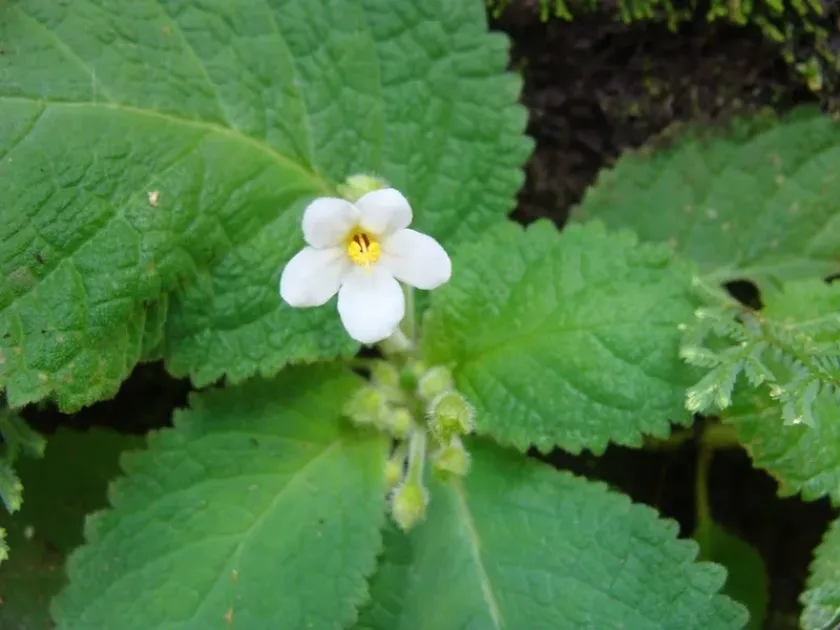
Description
Growing requirements
Amalophyllon rupestre belongs to the Gesneriaceae family. It is a perennial herbaceous plant that prefers specific ecological niches in its native natural environment.
This species is characterized by its growth in rocky areas and humid crevices, a feature reflected in its specific epithet rupestre. The plant is well-adapted to life in high-humidity conditions with filtered light.
For successful cultivation, a loose, well-draining soil mixture based on peat and perlite is essential. Maintaining a stable moisture level in the substrate is crucial, while avoiding waterlogging that can be fatal to the root system.
The culture requires an ambient temperature range of 20–25 degrees Celsius. Sudden temperature fluctuations and cold drafts negatively affect the development of vegetative mass and the flowering process.
When grown in closed environments, the plant exhibits sensitivity to the quality of irrigation water. It is recommended to use soft, room-temperature water to maintain optimal leaf turgor.
Main diseases and pests
The primary threats to this species include fungal diseases caused by improper watering practices. Excess moisture promotes the development of root rot and mold on the foliage.
Pests typical of tropical indoor cultures may also infest Amalophyllon. These include spider mites and mealybugs, which require prompt acaricidal or insecticidal treatment to prevent damage.