
Amalophyllon macrophyllum
Amalophyllon macrophyllum
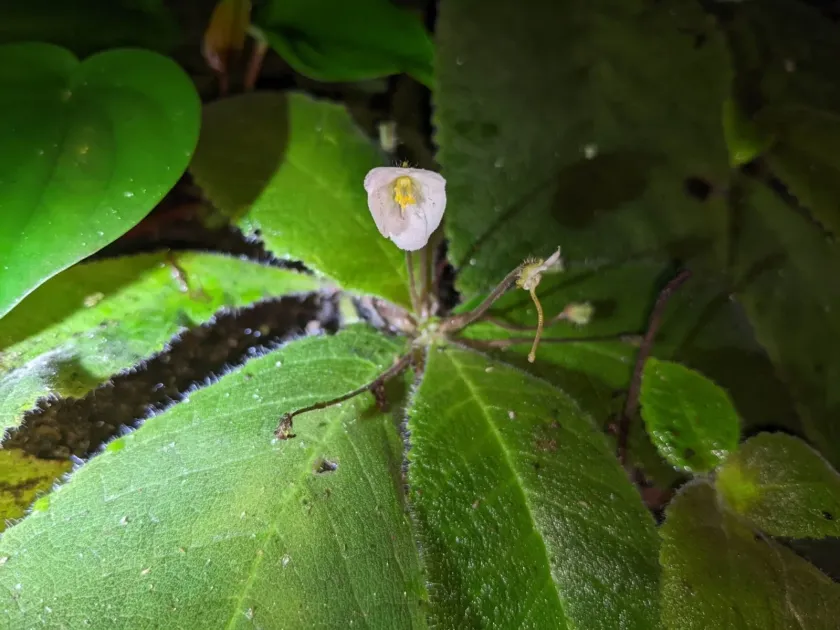
Description
Growing requirements
Amalophyllon macrophyllum is an herbaceous perennial belonging to the Gesneriaceae family. Native to the humid rainforests of Central America, it is highly valued by enthusiasts for its unique, large, and textured foliage.
The species requires a stable environment with high humidity levels, ideally maintained between 60% and 80%. This mimics its natural understory habitat where moisture is consistent throughout the year.
Temperature management is crucial, with an optimal range between 20°C and 26°C. Avoid exposing the plant to sudden temperature fluctuations or cold drafts, which can cause significant stress and physical decline.
The soil substrate must be exceptionally well-draining yet capable of retaining moisture. A mixture comprising peat moss, perlite, and coarse organic components like bark or vermiculite is generally recommended for healthy root development.
Bright, indirect light is essential for maintaining the intense coloration and structure of the leaves. Direct sun exposure should be strictly avoided to prevent scorching the delicate leaf tissues.
Main diseases and pests
The most common threat to this plant is root rot, typically caused by excessive watering or poor drainage in the container. Monitoring soil moisture before every irrigation cycle is standard practice.
Spider mites are the primary pest concern, particularly in environments with low air circulation and dry conditions. They are known for creating fine webbing on the undersides of leaves and sucking out plant nutrients.
Fungal infections, including Botrytis and various mildews, may develop if the foliage remains wet for extended periods. Ensuring good airflow around the plant helps mitigate the risk of these pathogens.
Mealybugs can occasionally infest the plant, hiding in the leaf axils. Physical removal with an alcohol-dampened swab is often effective if the infestation is detected early.
Maintaining a clean and hygienic growing area is essential for disease prevention. Removing any dead or yellowing leaves promptly prevents the spread of opportunistic fungal spores.