
Garlic mustard
Alliaria petiolata
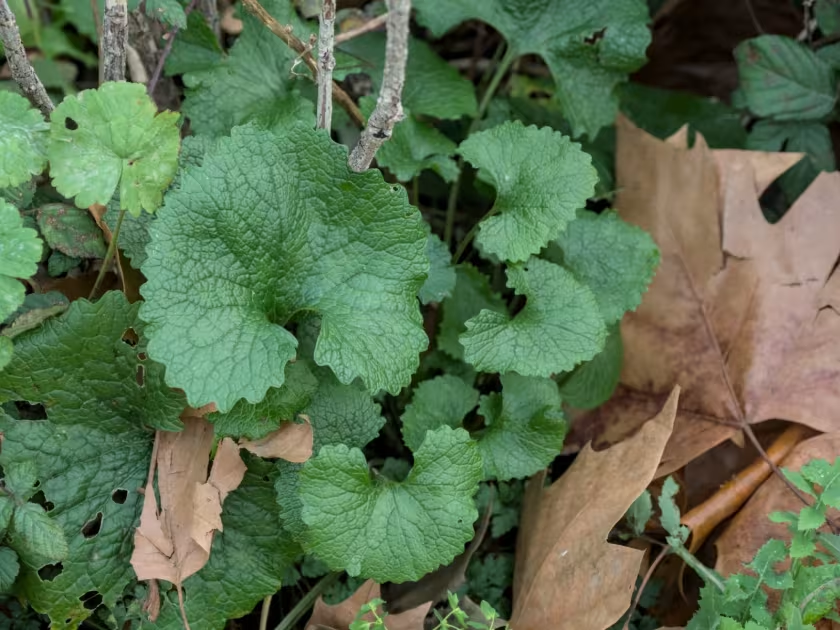
Description
Sowing dates
Garlic mustard (Alliaria petiolata) is a biennial flowering plant in the mustard family, Brassicaceae. It develops a basal rosette of leaves during its first year and produces a flower stalk in its second year.
The optimal time for sowing is autumn. Seeds require a period of cold stratification (vernalization) to break dormancy and germinate successfully. Sowing in late October or November ensures natural chilling.
Seeds should be sown on well-drained, loose soil at a depth of approximately 0.5 cm. Ensure good seed-to-soil contact by lightly raking the surface after broadcasting the seeds.
If starting indoors, seeds must be kept in moist, cold conditions (near 0°C) for several weeks before being planted. Direct seeding is generally more effective for this species due to its high germination rate in outdoor environments.
Since the plant is a prolific self-seeder, it is essential to manage its spread by harvesting flower stalks before the seeds ripen and disperse. This control prevents the plant from becoming invasive in non-targeted garden areas.
Growing requirements
Garlic mustard thrives in soils rich in organic matter and nitrogen. It prefers slightly acidic to neutral soil conditions, which are characteristic of shaded forest floors and garden borders.
One of the most notable features of this crop is its high shade tolerance. Unlike many garden greens that require full sun, garlic mustard performs well in partial to full shade, making it perfect for under-utilized garden corners.
Moisture availability is critical during the first year of growth. While it is a hardy plant, prolonged drought can stunt its development and lead to premature bolting in the second year.
The plant does not require high levels of chemical fertilization. Composted organic material added to the planting site is sufficient to support healthy foliage production and robust root growth.
Garlic mustard is exceptionally cold-hardy. The first-year rosettes stay green throughout the winter in many temperate climates, allowing for early season harvests in the following spring.
Main diseases and pests
Garlic mustard contains glucosinolates, which act as a natural defense mechanism against many generalist insects. This chemical profile makes it generally resistant to most common garden pests.
Slugs and snails pose the greatest threat to young rosettes. They can consume the tender leaves quickly during damp, cool spring weather, so vigilant monitoring or protective measures may be required.
Fungal issues such as downy mildew can occur if the planting density is too high. Proper spacing ensures airflow, reducing the risk of humidity-related pathogens that can ruin the leaves.
Crucifer flea beetles may feed on the foliage during hot, dry spells. While they rarely kill the plant, they can create unsightly holes, reducing the quality of the harvested produce for market.
Any signs of disease, particularly leaf deformation, should be addressed by removing and destroying the affected plants. It is crucial to avoid chemical pesticides since the plant is consumed as a culinary green.
Harvesting
The primary harvest involves leaves gathered during the first year of growth. These leaves are most tender and possess the characteristic garlic-like flavor before the plant transitions to the reproductive stage.
The roots of first-year plants are also edible and possess a pungent, horseradish-like aroma. They are best harvested in late autumn when the plant has stored maximum energy in its root system.
For optimal culinary results, harvest leaves early in the morning. Use the produce immediately, as the essential oils responsible for the flavor profile are highly volatile and dissipate rapidly after harvest.
If seed production is desired, allow the plants to bolt in the second year. Harvest the dry seed pods before they shatter to ensure collection. Store the seeds in a cool, dry place to maintain viability.
After harvesting, keep the greens in a chilled environment to prevent wilting. For longer-term storage, the leaves can be processed into pesto or frozen, though they lose some of their signature pungency when dried.