
Alfredia cernua
Alfredia cernua
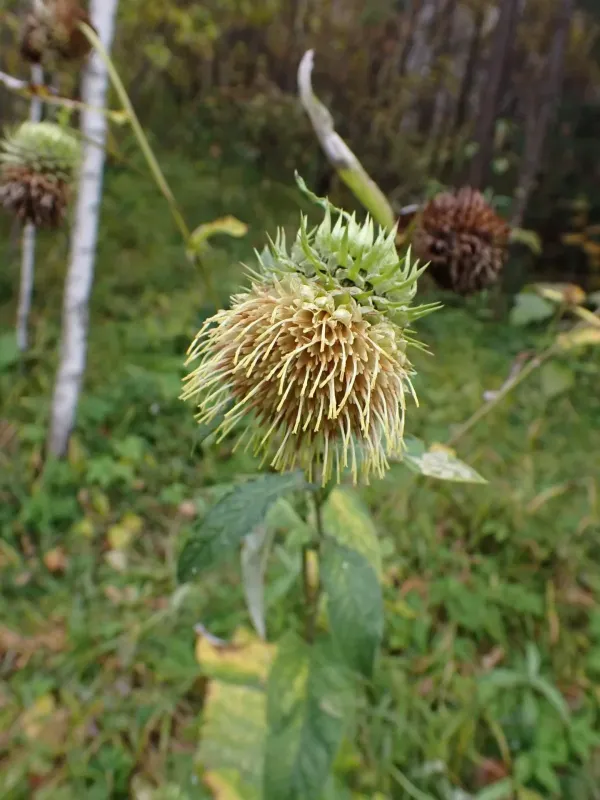
Description
Sowing dates
Alfredia cernua is a perennial herbaceous plant belonging to the Asteraceae family. The seeds exhibit high germination energy, although successful field establishment requires stratification under low-temperature conditions.
Sowing in open ground is recommended before winter, allowing the seeds to undergo a natural conditioning cycle in the soil. Spring sowing requires pre-chilling the seed material in a refrigerator for at least a month.
The sowing depth is 1–2 centimeters, as the seeds require exposure to light to initiate biological activation. In dense stands, seedlings must be thinned to ensure the proper development of the basal leaf rosettes.
For industrial cultivation, row sowing with intervals of up to 60 centimeters is considered optimal. This provides sufficient nutritional space for each vigorous plant throughout the long vegetation cycle.
During the first months after emergence, the crop grows slowly while forming its root rosette, so careful weeding is essential to prevent competitive pressure from weeds.
Growing requirements
The plant has moderate environmental requirements, preferring fertile loam soils with efficient drainage. It poorly tolerates stagnant moisture, which can lead to the rotting of the powerful taproot.
Alfredia cernua exhibits high winter hardiness and can withstand the harsh climatic conditions typical of its native range in the mountain-forest belts of Siberia and Altai.
For full development, the crop requires sufficient light, though it successfully tolerates partial shading during morning or evening hours. The plant is highly responsive to organic fertilizer application in the autumn.
The optimal soil pH range for this species is neutral (6.5–7.0). In conditions of excessive acidity, growth retardation and reduced biomass productivity are often observed.
In regions with arid climates, the crop requires regular irrigation, particularly during the phase of active above-ground growth in the first half of the summer.
Yield
The productivity of Alfredia is measured by the green mass yield and the amount of harvested seeds, which are highly valued in the pharmaceutical industry and traditional medicine. Yields remain stable when agronomic standards are met.
Maximum raw material harvest is reached in the third year of the plant's life, when it forms a powerful flowering stem reaching up to two meters in height. During this stage, active accumulation of secondary metabolites occurs.
Economic use involves harvesting the above-ground parts of the plant, which contain flavonoids and other bioactive compounds. The average yield of green mass is 15–25 centners per hectare, depending on site conditions.
Seed material collection is performed as the seeds ripen in the flower heads, usually occurring in the second half of August or early September. Avoiding over-ripening is crucial, as the seeds shatter easily.
The total biomass of the crop recovers quickly after cutting, allowing the plant to be used in a perennial cultivation cycle for up to 5–7 years in the same field.
Main diseases and pests
The main threats to the crop are fungal diseases that develop when moisture regimes are disrupted. Root rots are most dangerous during the early stages of vegetation if watering is excessive.
Among pests, various leaf-eating insects, including butterfly larvae and weevils, can cause significant damage by affecting growth points and foliage.
- Powdery mildew in dense plantings.
- Rust on leaves during high-humidity seasons.
- Aphids that suck juices from young inflorescences.
- Root system damage caused by wireworms.
To control diseases, preventive treatment with bio-fungicides is recommended, along with maintaining proper spatial isolation between rows. Chemical control methods should be strictly limited due to the medicinal use of the crop.
Timely removal of infected plant parts helps halt the spread of infection throughout the plantation and preserves the market quality of the harvest.