
Calophyllum inophyllum
Calophyllum inophyllum L.
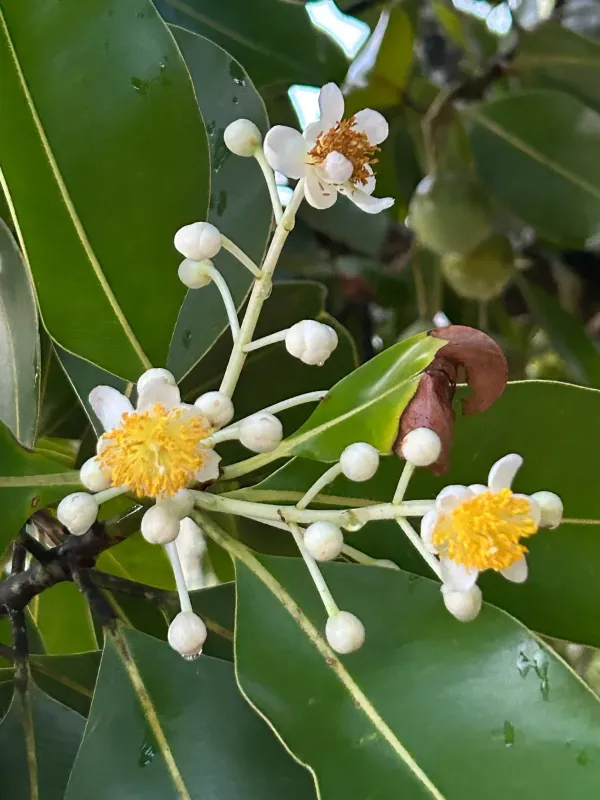
Description
Sowing dates
Propagation of Calophyllum inophyllum is primarily achieved through seeds. Fresh seeds exhibit high germination rates, making it essential to sow them shortly after harvest to ensure optimal establishment of seedlings in the nursery.
Seeds should be sown in well-drained nursery containers or beds using a light, nutrient-rich substrate. Protecting young sprouts from direct intense sunlight during the first few months is crucial for their survival.
Transplanting the seedlings into the field should coincide with the onset of the rainy season. This timing provides adequate soil moisture, allowing the root systems to anchor effectively before the dry season begins.
Planting density is generally set at 6 to 8 meters between trees to allow for the development of a broad canopy. This spacing is vital for air circulation and light penetration, which are essential for future fruit production.
Early maintenance involves consistent watering and keeping the area around the base of the saplings free from weeds. As the tree matures, it develops a hardier constitution and becomes more resilient to environmental stressors.
Growing requirements
This species belongs to the family Clusiaceae and is naturally distributed across coastal regions of the Indian and Pacific Oceans. It is remarkably well-adapted to maritime environments, including salty air and sandy soil.
The tree thrives in tropical climates with stable temperatures and significant annual rainfall. While it prefers sandy or alluvial soils, it can adapt to various soil types, provided that they offer excellent drainage.
It is a slow-growing evergreen tree that requires full sun exposure to reach its maximum potential. Lack of sufficient sunlight leads to stunted growth and significantly reduces the tree's ability to flower and set fruit.
Calophyllum inophyllum is characterized by its large, glossy, dark green leaves and thick, durable bark. These features enable the tree to survive in exposed coastal conditions where wind and salt spray are common.
Temperature sensitivity is a limiting factor for its cultivation. The species cannot withstand frost, which restricts its agricultural range strictly to tropical and subtropical zones with no temperature extremes.
Yield
The primary economic output of the tree is its seeds, which are processed to extract high-quality tamanu oil. The tree begins to bear fruit after 5 to 7 years, with commercial-scale yields occurring after 10 years of growth.
A single mature tree can produce between 50 to 100 kilograms of fruit annually. The kernels are rich in oil, typically ranging from 40% to 70% of their weight, making it a valuable crop for sustainable oil production.
Beyond its seeds, the timber of Calophyllum inophyllum is highly prized for its durability and resistance to decay. It has a long history of use in boat building and cabinetry due to its strength and beauty.
Harvesting involves collecting the fruit after it naturally falls to the ground. This ensures that the seeds have reached maximum maturity, which is necessary for achieving high-quality oil extraction.
Processing consists of sun-drying the fruit to separate the kernels, followed by cold-pressing. This mechanical extraction method preserves the chemical integrity and bioactive components of the resulting tamanu oil.
Main diseases and pests
The tree is generally robust, but excessive soil moisture and poor drainage can lead to fungal infections. Preventing waterlogged conditions is the most effective management strategy against root and stem rots.
Leaf-eating insects and aphids can occasionally infest saplings in nurseries. However, these pests rarely reach levels requiring chemical intervention, as natural biological controls often keep populations in check.
Nematodes are a potential threat to root development, especially when the crop is planted in fields previously used for other susceptible species. Soil preparation and sanitation are essential for new plantations.
Proper pruning of dead or diseased branches helps maintain the overall health of the tree. This practice minimizes the risk of infection spreading through the canopy during humid periods of the year.
Given its natural evolutionary adaptation to harsh coastal environments, the tree shows significant resistance to most agricultural pests. Maintaining a balanced ecosystem within the orchard is sufficient to ensure tree longevity.