
Albizia tanganyicensis
Albizia tanganyicensis
Description
Growing requirements
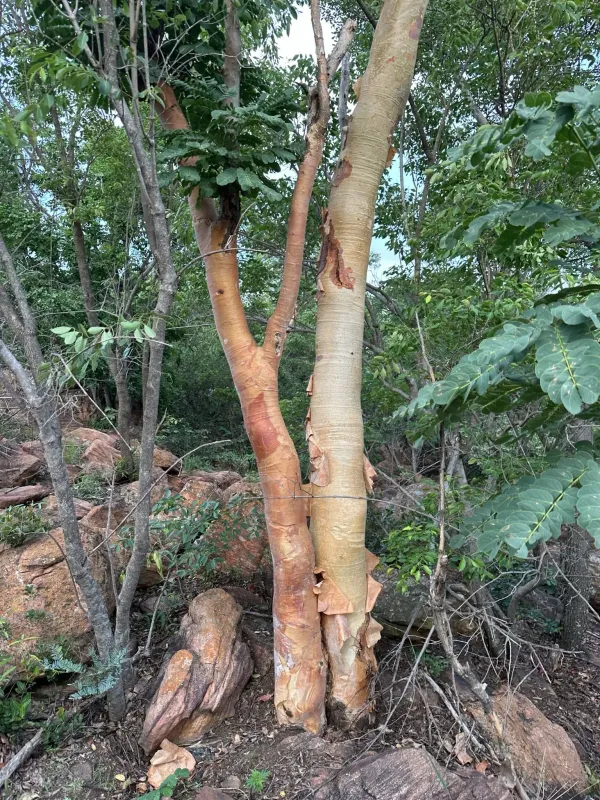
Albizia tanganyicensis, commonly known as the paper-bark albizia, is a deciduous tree belonging to the Fabaceae family. It is distinct for its striking, peeling bark that sheds in large papery flakes.
Native to the regions around Lake Tanganyika in East Africa, this species is naturally adapted to tropical and subtropical climates characterized by seasonal rainfall patterns and intense sunlight.
The tree thrives in well-drained, stony, or sandy soils. It is particularly intolerant of waterlogged conditions, which can lead to rapid root rot, especially during the dormant season.
As a light-demanding species, it requires full sun exposure to maintain its healthy growth and characteristic architectural form. It is highly resistant to drought once established in the landscape.
Botanically, it features bipinnate leaves and clusters of flowers that are typical for the genus, providing aesthetic value throughout the growing season.
Harvesting
The primary utility of Albizia tanganyicensis is as an ornamental plant in xeriscaping or dry-climate landscape designs. Its unique bark texture makes it a popular choice for botanical gardens.
While not a major timber species, the wood can be utilized for specialized carpentry and craft projects, given its aesthetic properties and moderate durability.
Seed harvesting involves collecting the flat, woody pods after they have dried on the tree. Due to the hard seed coat, scarification is necessary to ensure uniform germination rates.
In its native environment, the tree serves as a vital component of the ecosystem, offering shade and browse for wildlife, which contributes to the preservation of local biodiversity.
Maintenance is generally low, as the species exhibits strong resilience to environmental stressors once the tree has reached maturity and successfully adapted to its planting site.