
Albizia speciosa
Albizia speciosa
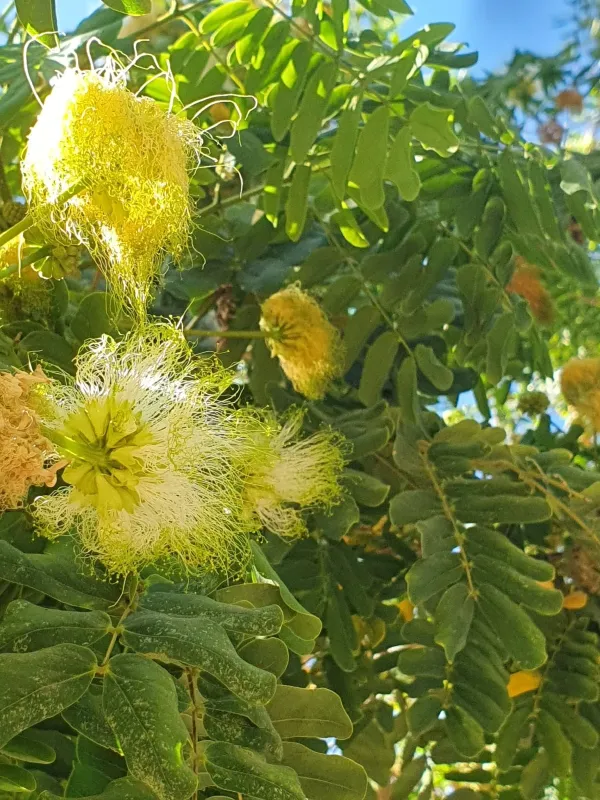
Description
Sowing dates
The planting of Albizia speciosa typically occurs during the spring season when soil temperatures remain consistently above 20 degrees Celsius.
Seeds have hard coats, necessitating scarification or pre-soaking in warm water to ensure uniform and efficient germination rates.
Sowing is conducted in nursery beds or containers using a well-draining, nutrient-rich substrate to support the development of strong seedlings.
The seeds should be planted at a depth of 1-2 centimeters, ensuring they are protected while still being able to emerge successfully.
Adequate moisture management is crucial during the early stages of growth to prevent the delicate seedlings from drying out or suffering from fungal issues.
Growing requirements
Albizia speciosa is a member of the Fabaceae family that thrives in regions with abundant sunlight and warm tropical or subtropical climates.
The plant prefers fertile, well-drained soil types, demonstrating an ability to adapt to varying pH levels while favoring near-neutral conditions.
Although the species is drought-tolerant once established, optimal growth and leaf production require regular moisture during the peak growing season.
It is sensitive to hard frosts, meaning cultivation should be localized to areas where cold snaps are either rare or non-existent throughout the year.
As a nitrogen-fixing species, it plays a vital role in soil enrichment, making it an excellent candidate for sustainable agroforestry and land restoration.
Yield
The primary economic use of Albizia speciosa involves its high-quality wood, which is utilized in fine woodworking and furniture production.
Beyond timber, the plant is valued for its rapid biomass accumulation, which can be harvested for organic soil amendments or livestock fodder.
In managed agricultural systems, the tree is often used as a protective windbreak or shade crop to improve the microclimate for secondary crops.
Economic yields are heavily influenced by planting density and the implementation of regular pruning techniques to maximize structural timber growth.
The fast-growing nature of this species allows for a relatively short rotation period, offering a sustainable alternative to slower-maturing hardwoods.
Main diseases and pests
Common threats to Albizia speciosa include defoliating insects and spider mites, which are particularly active during periods of intense heat and dry weather.
Excessive humidity and poor soil drainage can lead to various root rot pathogens that significantly weaken the tree's overall stability and growth.
Effective pest management involves integrated control methods, such as utilizing bio-rational insecticides and promoting the presence of natural predators.
Sanitation practices, including the removal of dead or infected branches, are essential to prevent the spread of diseases within dense plantations.
Ongoing monitoring of foliage health is critical to detect potential pest outbreaks before they result in significant damage to the plant's canopy.
Harvesting
Timber harvesting is optimally scheduled for the dormant winter season to minimize sap flow and improve the durability and quality of the wood.
Biomass for fodder or organic fertilizer is harvested through controlled pruning, which stimulates regrowth and maintains the tree's health.
Seed harvesting should be undertaken when the pods become brittle and dry, indicating that the seeds have reached full physiological maturity.
Collected seeds must be stored in a dry, temperature-controlled environment to maintain long-term viability and prevent fungal degradation.
Efficient harvesting techniques involve the use of specialized machinery to ensure clean cuts, which aids in the rapid recovery of the remaining tree structure.