
Albizia petersiana
Albizia petersiana
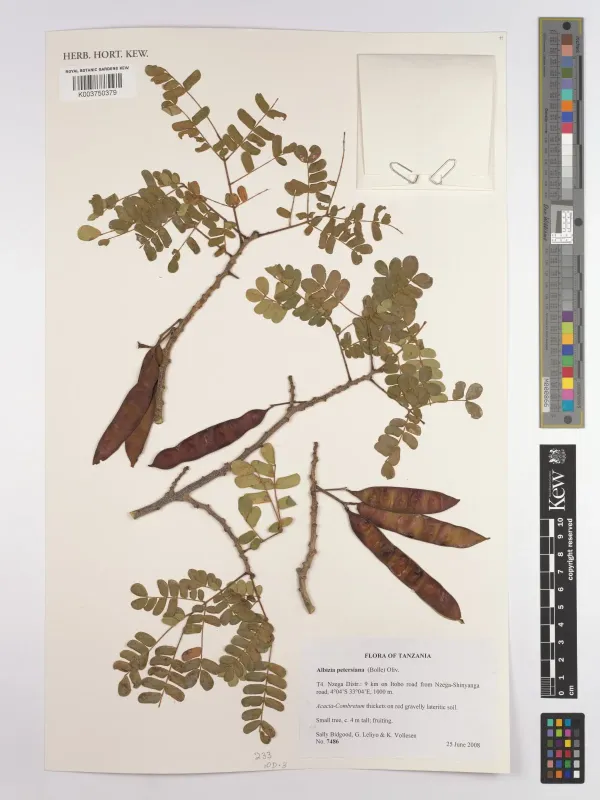
Description
Growing requirements
Albizia petersiana is a distinguished woody species within the Fabaceae family, primarily native to tropical and subtropical regions. It is highly valued for its ecological contribution and structural resilience in diverse savanna landscapes.
The species requires abundant sunlight to reach its full growth potential. While it exhibits a remarkable tolerance for various soil textures, it flourishes best in well-drained loamy soils that allow for deep root penetration and nutrient uptake.
This tree is well-adapted to environments characterized by long dry seasons. Its physiological mechanisms allow it to conserve water effectively, making it a sustainable choice for reforestation projects in arid or semi-arid zones.
Climate is the primary limiting factor for its distribution, as the species is sensitive to frost and cold snaps. It thrives in consistent tropical temperatures, typically requiring a frost-free environment to maintain its health and foliage development.
Agro-technically, the tree is often utilized as a nitrogen-fixing component in agroforestry systems. By improving soil fertility, it benefits the surrounding vegetation, acting as a natural companion plant for various agricultural crops.
Main diseases and pests
Albizia petersiana may be susceptible to infestations by common tropical pests, including borers and scale insects that can compromise the integrity of the bark and branches. Regular inspection is recommended to detect early signs of infestation.
Fungal pathogens associated with high humidity levels pose a threat to the leaves and tender stems. Ensuring adequate spacing between individual trees to promote air circulation is a critical management practice for preventing disease outbreaks.