
Albizia odoratissima
Albizia odoratissima
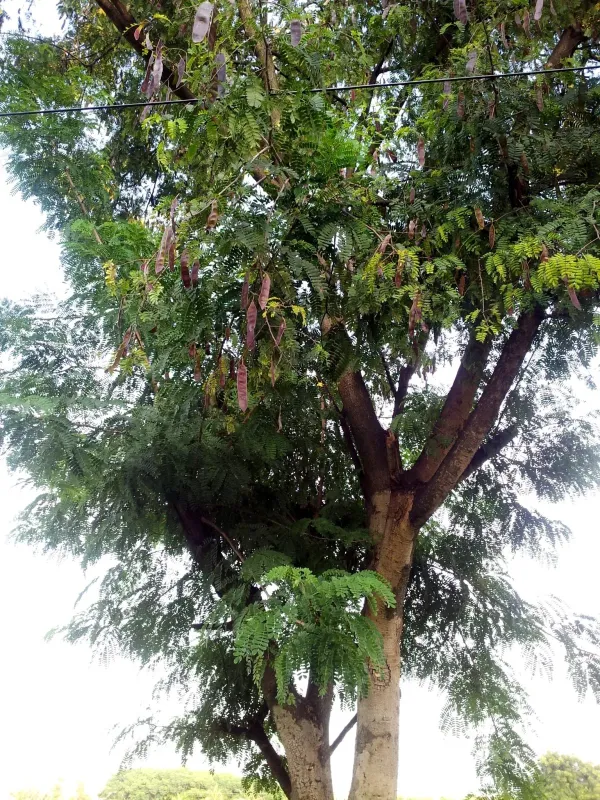
Description
Sowing dates
Albizia odoratissima is primarily propagated by seeds, which require pre-sowing treatment to improve germination rates significantly.
The seeds should be soaked in warm water for 24 hours or lightly scarified to overcome dormancy and ensure uniform seedling emergence.
Sowing is conducted in well-prepared nursery beds or containers filled with a sandy-loam substrate rich in organic matter.
Seedlings are maintained in the nursery for several months until they reach a robust size, typically 30 to 50 centimeters in height, for field planting.
The optimal time for outplanting is at the onset of the rainy season to guarantee sufficient moisture for successful establishment in the field.
Growing requirements
As a member of the Fabaceae family, this species thrives in well-drained, fertile soils, preferring neutral to slightly acidic pH levels for optimal growth.
The tree is distinctly heliophilic, requiring full sun exposure to maintain high photosynthetic activity and promote healthy vegetative development.
While mature trees are somewhat drought-tolerant, young plantations require consistent irrigation during the first two years to establish a stable root system.
The climate should be tropical or subtropical, characterized by warm temperatures and an absence of severe frost, which can damage juvenile tissues.
Being a nitrogen-fixing species, it serves an essential role in agricultural systems by improving soil structure and nutrient content through root symbiosis.
Yield
The primary economic value of this species lies in its high-quality timber, known for its density, hardness, and decorative dark-brown heartwood.
It is extensively utilized in the furniture industry, for construction beams, and in the production of high-grade flooring and interior joinery.
The foliage provides a high-quality protein-rich fodder for cattle and goats, making it an excellent component for integrated crop-livestock farming.
The flowers and bark contain essential oils and tannins, which are sometimes harvested for traditional medicinal applications or cosmetic formulations.
In agroforestry, the tree is highly regarded as a shade provider for sensitive crops like coffee and tea, and as a windbreak for exposed plantations.
Main diseases and pests
The species is susceptible to various defoliating caterpillars and wood-boring beetles that can significantly impair the quality of the timber if left unmanaged.
Root rot is a common threat in waterlogged soils, caused by fungal pathogens that thrive in environments with poor drainage and restricted airflow.
Vascular wilt diseases can periodically affect plantation stands, leading to rapid decline in vigor and requiring immediate sanitation of infected trees.
Scales and mealybugs may infest the branches, leading to the development of sooty mold, which reduces the overall photosynthetic capacity of the tree.
- Implementation of regular pruning to maintain tree health.
- Ensuring proper field drainage to prevent fungal root diseases.
- Integrated pest management utilizing biological controls where possible.
Harvesting
Timber harvest is typically planned when trees reach technical maturity, usually between 15 and 20 years after the initial planting date.
Seed collection involves gathering dried pods from the canopy once they turn dark brown and begin to split open naturally.
Bark harvesting for essential oils or tannin extracts should be performed cautiously, using selective stripping methods to ensure tree longevity.
For fodder production, cyclic harvesting of lateral branches is recommended to encourage continuous vegetative growth and increase leaf yield.
Post-harvest management involves proper drying and protection of the wood from moisture and pests to preserve the integrity of the raw material.