
Albizia chevalieri
Albizia chevalieri
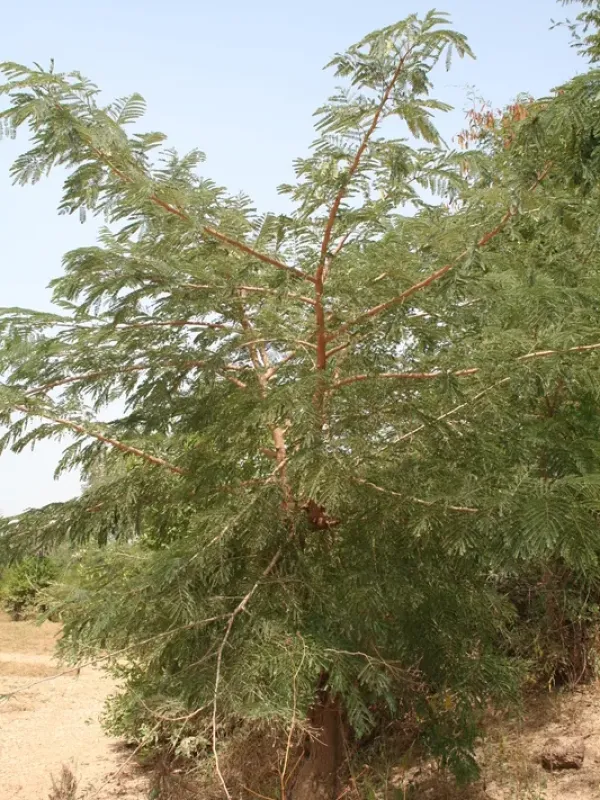
Description
Sowing dates
Propagation of Albizia chevalieri is primarily achieved through seeds at the onset of the rainy season. The optimal sowing time occurs immediately after the first steady rains, when the soil warms up and retains sufficient moisture for germination.
The seeds of this species possess a hard coat, requiring scarification or soaking in warm water before sowing in nurseries. This practice significantly increases germination rates and ensures uniform seedling emergence at the early stage.
For establishing shelterbelts or plantations, it is recommended to transplant seedlings grown in containers. This method allows the plant to adapt more effectively to field conditions and minimizes losses during transplanting into open soil.
The planting pattern depends on the intended use; for agroforestry systems, spacing between rows is maintained at 5–6 meters, ensuring sufficient light penetration for crops grown in the inter-rows.
When sowing directly, the seed depth should not exceed 2–3 centimeters. It is crucial to ensure reliable contact between the seed and moistened soil to initiate growth processes quickly.
Growing requirements
Albizia chevalieri is a member of the Fabaceae family, perfectly adapted to the savanna and semi-arid conditions of West Africa. The crop demonstrates high resilience to prolonged periods of drought.
The plant prefers well-drained sandy or sandy-loam soils. It is capable of thriving on nutrient-poor substrates due to its symbiosis with nitrogen-fixing bacteria, making it valuable for restoring fertility to degraded lands.
Optimal temperature ranges for active growth are between 25 and 35 degrees Celsius. The species is highly sensitive to waterlogging, therefore selecting a site with a slope or excellent natural drainage is a critical success factor.
The culture is photophilous and tolerates shading poorly during early development stages. Under intensive light conditions, the tree forms a sturdy crown and a developed root system that penetrates deep into soil horizons.
In its natural habitat, the tree withstands significant fluctuations in humidity; however, for maximum productivity in agricultural settings, monitoring to avoid prolonged submersion of the root collar is necessary.
Yield
The economic value of this crop lies not in massive fruit production, but in the yield of biomass and quality timber. Productivity depends on the age of the stands and the planting density per hectare.
The foliage of Albizia chevalieri is valued as high-protein fodder for livestock during the dry season. Regular pruning of lateral branches stimulates the growth of fresh greens suitable for silage preparation or direct grazing.
The timber of this species is characterized by moderate hardness and durability, finding applications in the manufacturing of agricultural tools and the construction of rural structures in its native regions.
When used in agroforestry, the yield of staple crops (such as millet or sorghum) grown under the canopy of Albizia may increase due to improved soil nitrogen cycling and reduced moisture evaporation rates.
Biomass harvesting for mulching and soil fertilization is conducted via scheduled pruning at the end of the dry season, allowing for the most efficient use of organic matter accumulated by the plant.
Main diseases and pests
The main threats to young plants are rodents and wild ungulates, which may damage bark and young shoots. Protection of stands in their early years requires the installation of fencing or the use of repellents.
Typical pests include various species of weevils and caterpillars that attack foliage. In cases of high pest concentration, the use of biological insecticides that are safe for the ecosystem may be required.
Fungal diseases, such as root rot, develop exclusively due to poor agricultural practices, particularly excessive watering or heavy waterlogged soils. Prevention consists of maintaining an appropriate moisture regime.
The tree is also susceptible to mistletoe infestation, which is a parasitic plant. Regular sanitary inspections and the timely removal of affected branches help maintain the health of the stands for many years.
Excessive intensity of livestock grazing directly beneath mature trees can lead to soil compaction and root damage, reducing the overall vitality and productivity of the tree stands.
Harvesting
Timber harvesting is conducted when the tree reaches 10–15 years of age. Selective logging promotes stand rejuvenation and maintains ecosystem balance, preventing the depletion of soil cover.
Fodder collection is performed by pruning branches. It is important to leave a sufficient portion of the crown to preserve the tree's photosynthetic capacity, ensuring rapid recovery of vegetative mass for the next season.
For seed harvesting, pods are collected directly from the tree after full maturity, when they acquire a characteristic brown hue. This allows for the selection of the highest quality planting material for future cycles.
After collection, seeds are dried in the shade to remove excess moisture, preventing mold development and preserving viability throughout the year. Storage is carried out in a dry, cool place in airtight containers.
The entire cycle of harvesting and resource collection from Albizia chevalieri requires minimal energy and technical expenditure, making this crop highly beneficial for sustainable agriculture in resource-constrained regions.