
Albizia antunesiana
Albizia antunesiana
Description
Growing requirements
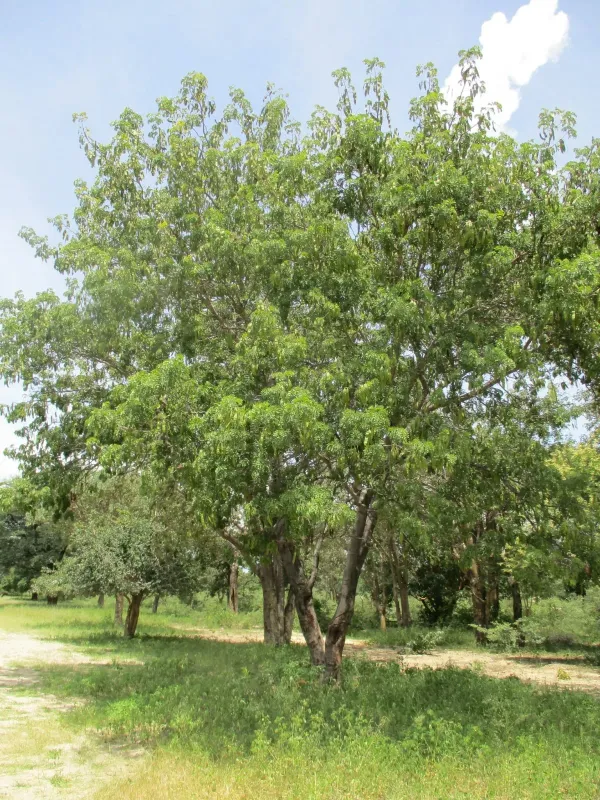
Albizia antunesiana is a prominent deciduous tree belonging to the Fabaceae family. Reaching heights of up to 20 meters, it is characterized by a sprawling crown and bipinnate foliage, which acts as a natural soil improver by fixing atmospheric nitrogen.
The species is native to tropical Southern Africa, with significant populations found in countries like Angola, Zambia, Namibia, and Zimbabwe. It thrives primarily in open woodland and savanna habitats, demonstrating high resilience to seasonal environmental fluctuations.
Regarding soil requirements, this tree prefers well-drained substrates ranging from sandy loams to rocky soils. It is remarkably capable of surviving in areas with low soil fertility, as it is well-adapted to the nutrient-poor conditions often found in its natural range.
Climatic adaptability is a hallmark of Albizia antunesiana. It is highly drought-tolerant, making it an excellent candidate for reforestation projects in arid or semi-arid regions where other commercial tree species might fail to establish.
The economic value of this tree lies in its timber, which is highly sought after by local craftsmen. Its wood is durable, aesthetically pleasing with a distinct grain, and resistant to environmental stress, making it ideal for furniture production and fine carpentry.
Main diseases and pests
Like many species in the legume family, Albizia antunesiana can be impacted by wood-boring insects. These pests can compromise the structural integrity of the timber, necessitating careful management in commercial woodlots to preserve quality.
Fungal pathogens represent a significant risk, particularly root rot triggered by waterlogged soil conditions. Proper site selection and drainage management are critical for maintaining healthy plantations and preventing the loss of young saplings.
Foliar diseases, appearing as spots or blight, can occur during periods of excessive humidity, leading to premature leaf drop. While rarely fatal to mature trees, this reduces annual growth increment and overall physiological vigor.
Herbivory remains a threat, especially for seedlings and young trees exposed to wildlife. Effective silvicultural practices often include the use of protective netting or fencing to ensure the trees can reach a height safe from browsing.
Effective management includes regular monitoring for signs of infestation or fungal activity. Implementing integrated pest management (IPM) strategies, such as maintaining healthy tree density and cleaning up forest debris, significantly reduces these risks.