
Airopsis tenella
Airopsis tenella
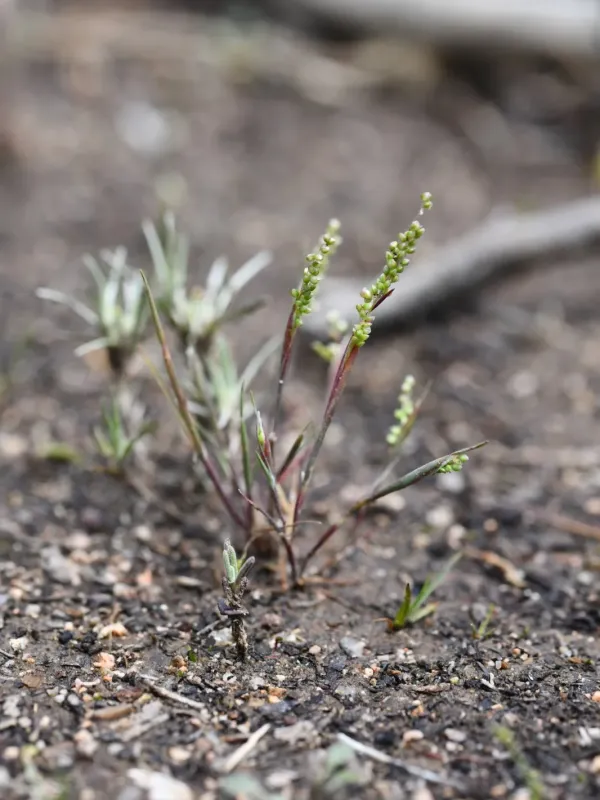
Description
Sowing dates
Airopsis tenella is an ephemeral plant species whose life cycle is closely linked to specific seasonal climatic patterns. In its natural habitat, seeds germinate primarily during the autumn and winter months when soil moisture levels are optimal for establishment.
The vegetative period of this grass is relatively short, which is a characteristic strategy for many Mediterranean flora types. The peak growth phase occurs in early spring, well before the onset of the arid summer season.
Cultivation requires careful attention to seeding depth due to the extremely small size of the seeds. Surface sowing or light incorporation into well-prepared soil beds is essential to ensure uniform germination.
Successful establishment is highly dependent on the accumulation of degree-days during the early growth stages. Under favorable conditions, emergence typically occurs within two weeks of planting.
The crop demonstrates high adaptability to photoperiod changes, provided that soil moisture remains consistent during the critical root development phase.
Growing requirements
As a member of the Poaceae family, Airopsis tenella thrives in specific ecological niches. It performs best in sandy or rocky soils that offer excellent drainage, as the plant is highly sensitive to waterlogged conditions.
The plant prefers soils with a neutral to slightly acidic pH. It does not require high levels of soil fertility, but balanced phosphorus and potassium applications can support biomass production in low-nutrient environments.
Adequate sunlight is essential for the development of Airopsis tenella. Shaded areas significantly limit the photosynthetic capacity of the plant and result in weak, stunted growth.
Proper soil management involves maintaining a loose structure to allow for sufficient aeration of the root system. Compacted soils can lead to physiological stress and reduced overall vitality of the crop.
Climatically, the species is thermophilic but requires moderate temperature regimes during the flowering stage to ensure successful pollination and seed maturation.
Main diseases and pests
The primary threats to Airopsis tenella include fungal infections such as rust, which can proliferate rapidly in high-humidity conditions. These pathogens can significantly diminish the quality and quantity of the forage biomass.
Root rot represents a major challenge in poorly drained soils. Preventing moisture stagnation through proper site selection and soil amendment is the best approach to mitigation.
Insect pests, including cereal flies and aphids, are known to attack the delicate tissues of the plant. Monitoring these populations during the spring is vital to prevent economic loss.
Thrips may affect inflorescences, leading to distorted spikelets and poor seed set. Integrated pest management strategies are recommended to manage these populations without disrupting beneficial soil microbes.
Maintaining crop vigor through proper sanitation and avoidance of nitrogen excess helps the plants resist secondary infections throughout the growing season.