
Agelaea pentagyna
Agelaea pentagyna
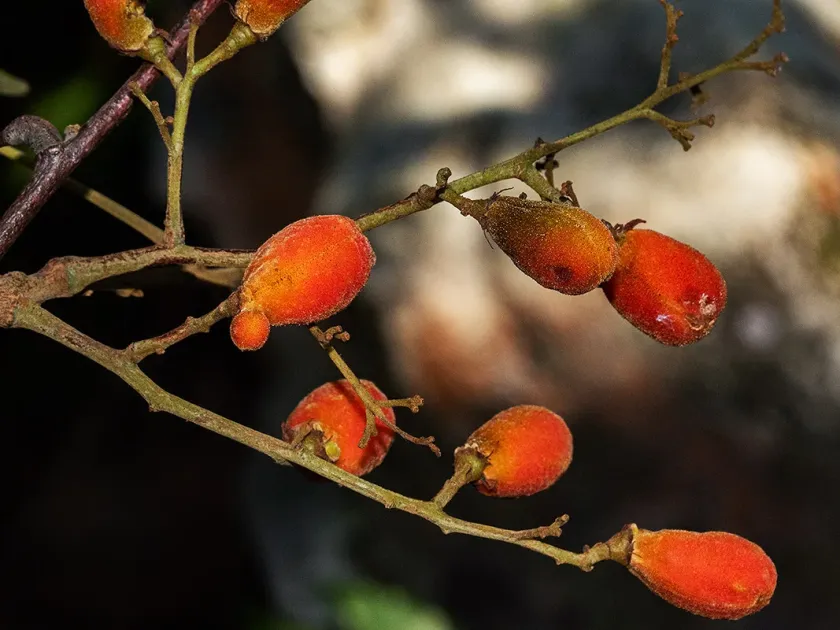
Description
Growing requirements
Agelaea pentagyna is a perennial woody climber belonging to the Connaraceae family. This species is native to tropical Africa, where it thrives as a vigorous vine within the dense, humid forest ecosystems typical of the equatorial belt.
The plant requires a tropical climate characterized by consistently warm temperatures and high humidity levels throughout the year. It is typically found in gallery forests and forest fringes, where it utilizes surrounding vegetation to climb and reach sunlight.
Optimal soil conditions for Agelaea pentagyna involve well-draining, nutrient-rich substrates. The species is highly sensitive to waterlogged conditions, which can lead to root decay, necessitating a soil structure that ensures efficient water drainage.
Botanically, the plant is noted for its ability to produce long, woody stems that support a dense canopy of foliage. Its reproductive structure consists of distinctive flowers with five carpels, a feature that distinguishes it within its genus and provides the basis for its scientific name.
While not a mainstream commercial crop, the management of Agelaea pentagyna in its natural habitat involves sustainable harvesting practices. Local communities often utilize its bark and roots for traditional medicinal purposes, relying on ancestral knowledge to ensure the plant's long-term survival.
Main diseases and pests
The primary threats to Agelaea pentagyna include fungal pathogens that exploit the high humidity of the tropical environment. These infections can manifest as leaf spots or stem cankers, potentially compromising the structural integrity of the liana.
Various tropical insect species pose a significant risk to the plant. Leaf-eating caterpillars are common pests that can strip foliage, reducing the plant's capacity for photosynthesis and overall vigor if the infestation is severe.
Sucking insects, such as scale insects and mealybugs, represent another group of threats. These pests deplete the plant's nutrient reserves and can weaken the host, making it more vulnerable to secondary bacterial or fungal infections.
Effective management requires regular inspection of the stems and leaves, especially if the plant is maintained in controlled or agroforestry settings. Removing heavily infested sections is a common practice to limit the spread of harmful pests and diseases.
Beyond biotic threats, habitat fragmentation and deforestation are the most critical challenges facing the species. As an essential component of the forest structure, the decline of these habitats directly threatens the continued existence of Agelaea pentagyna populations.