
Agelaea macrophylla
Agelaea macrophylla
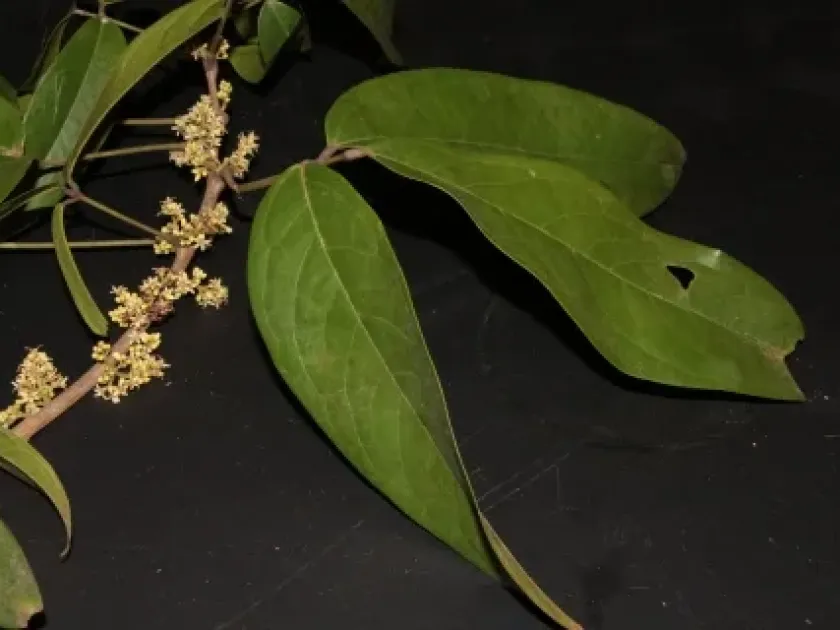
Description
Growing requirements
Agelaea macrophylla is a woody vine belonging to the Connaraceae family. Native to the tropical rainforests of Africa, this plant is well-adapted to high-humidity environments and warm climates where seasonal variations are minimal.
The plant thrives in deep, fertile soils that provide excellent drainage. A well-aerated substrate is crucial, as the root system is highly sensitive to waterlogging, which can quickly lead to root decay in stagnant conditions.
Regarding light requirements, Agelaea macrophylla prefers dappled sunlight or partial shade. In its natural habitat, it grows as an understory plant, making it well-suited for environments with filtered light.
Temperature management is critical for the survival of this species. It requires a stable tropical climate with temperatures consistently above 15 degrees Celsius to maintain active growth and prevent physiological stress.
Economically, the plant is primarily valued for its stems, which are harvested for weaving, and its traditional use in various indigenous medicinal practices where the bark and leaves are utilized for their chemical properties.
Main diseases and pests
Common plant threats include fungal infections that manifest during periods of excessive humidity, particularly if there is a lack of proper air circulation around the canopy of the vine.
Pests such as scale insects and aphids are frequent visitors that feed on the sap of young stems and leaves. These infestations can severely weaken the plant if left untreated during the early stages.
Root-knot nematodes can pose a significant challenge if the soil is not properly treated or sourced from reputable substrates, especially in nursery settings where the plant is propagated.
Powdery mildew may occur on the foliage if the plant is exposed to sudden temperature drops followed by high humidity, requiring prompt application of horticultural oils or fungicides.
Proactive management involves monitoring leaf undersides and ensuring that the irrigation system delivers water directly to the soil, avoiding wetting the leaves excessively to reduce disease pressure.