
Fool's parsley
Aethusa cynapium L.
Description
Growing requirements
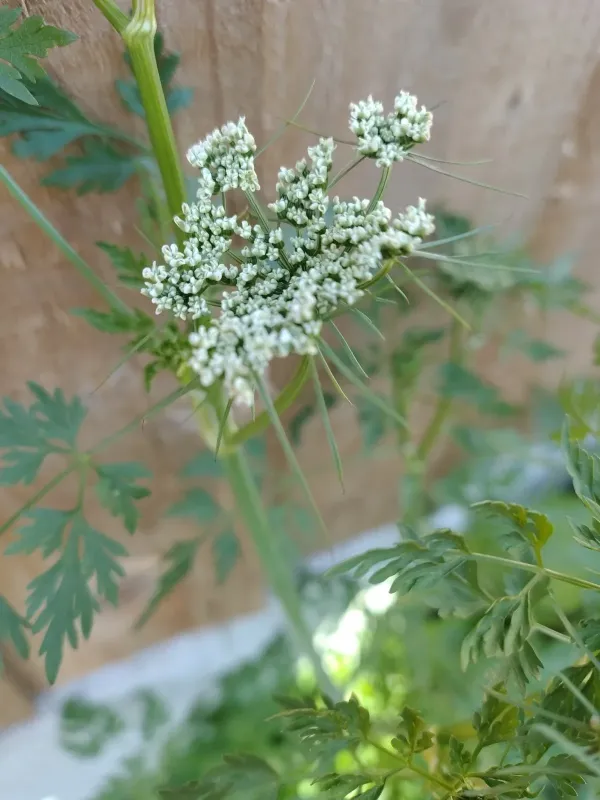
Fool's parsley (Aethusa cynapium L.) is a herbaceous plant belonging to the Apiaceae family. It is widely distributed across Europe and Asia, often found in nutrient-rich soils such as gardens, cultivated fields, and roadside verges. It is categorized as a common agricultural weed due to its rapid growth and high seed production.
The plant is known for its smooth, hairless stem, which often features reddish-purple spots near the base. Its leaves are dark green and glossy, bearing a striking resemblance to common parsley, which poses a significant health risk as it is highly toxic if ingested by humans or livestock.
Fool's parsley thrives in temperate climates and prefers soils with moderate to high moisture levels. It is highly adaptable and can grow in both sunny spots and partially shaded environments, making it a persistent competitor in agricultural settings where moisture is well-managed.
From an agricultural standpoint, it has no economic value and is considered a dangerous contaminant. Because it contains potent alkaloids, its presence in pastures or fodder crops can lead to serious health complications for livestock, requiring strict measures to prevent it from entering the supply chain.
The management of this weed requires a combination of mechanical and cultural practices. Regular hoeing before the plants flower is essential to prevent the soil seed bank from increasing. Additionally, crop rotation and the use of competitive cover crops are effective strategies to suppress its development on agricultural land.
Main diseases and pests
Fool's parsley serves as a vector for various pests and diseases that affect commercial crops within the Apiaceae family. Its presence in field margins increases the risk of infestation.
- Viral diseases such as Cucumber Mosaic Virus are often hosted by this plant.
- Fungal pathogens like powdery mildew and Septoria blight utilize it as a reservoir.
- Aphid populations frequently use fool's parsley to build up numbers before migrating to crops.
- Root-knot nematodes can also be supported by the root systems of this weed.
- Rust fungi can survive the winter on this plant, posing a threat to early spring crops.
Effective management requires eradicating the weed not only within the crops but also in bordering areas to reduce the overall disease pressure on the farm.