
Aechmea recurvata
Aechmea recurvata (Klotzsch) L. B. Sm.
Description
Growing requirements
Aechmea recurvata is a perennial epiphytic plant belonging to the Bromeliaceae family. Native to South America, specifically in regions of Brazil, Uruguay, and Argentina, it naturally thrives in diverse habitats ranging from tropical rainforests to rocky, sun-exposed outcrops in arid conditions.
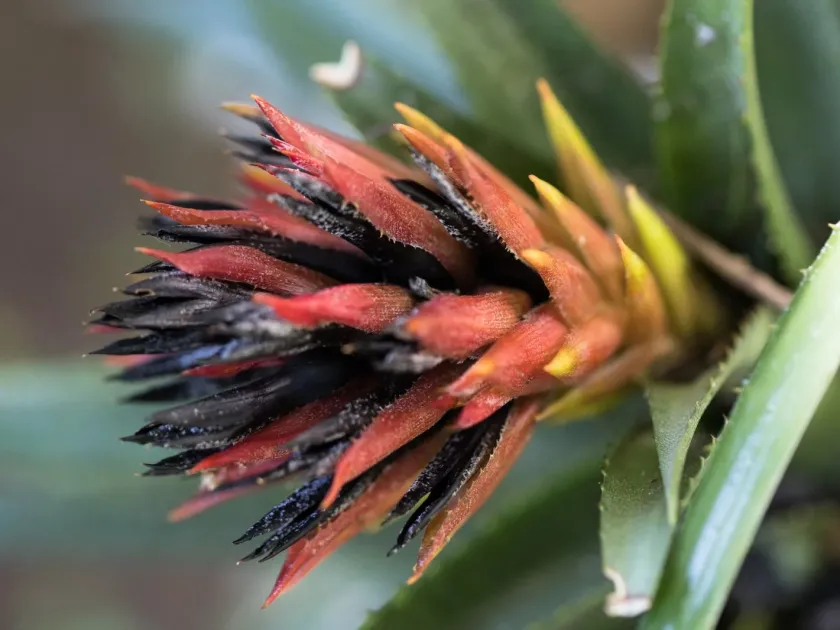
The plant is characterized by a compact, vase-shaped rosette of stiff, leathery leaves with serrated margins. Its most notable feature is the inflorescence, which consists of vibrant red or pink bracts that enclose small, inconspicuous flowers, providing a long-lasting ornamental display.
Cultivation requires bright, indirect light to maintain the plant's structural integrity and leaf coloration. While some cultivars can tolerate filtered sunlight, intense mid-day sun should be avoided to prevent scorched leaf tips, especially in greenhouse or indoor environments.
Soil or growing media must be extremely well-draining, mimicking the epiphytic conditions of the wild. A mixture of pine bark, perlite, peat moss, and charcoal is recommended to ensure adequate aeration around the roots and to prevent compaction, which is a frequent cause of mortality in bromeliads.
Water management is critical, as Aechmea recurvata absorbs moisture primarily through its central tank or rosette. Water should be kept clean and refreshed periodically to prevent bacterial buildup. The surrounding substrate should be kept slightly moist but never waterlogged to avoid root rot.
Main diseases and pests
Common pests include spider mites, which thrive in low-humidity conditions, and mealybugs that congregate in the leaf axils. Regular inspection of the rosette base and foliage is essential for early detection and prevention of infestation, which can cause significant stunted growth.
Fungal rot is the most common physiological disorder, primarily caused by stagnant water in the rosette combined with cool, low-light conditions. Providing adequate ventilation and reducing water volume in the central tank during winter months significantly decreases the risk of necrotic lesions and rot.