
Aechmea orlandiana
Aechmea orlandiana L. B. Sm.
Description
Growing requirements
Aechmea orlandiana is a fascinating species belonging to the Bromeliaceae family. Originating from the tropical regions of Central America, this plant is primarily an epiphyte, naturally anchoring itself onto the bark of trees in humid, shaded forest environments.
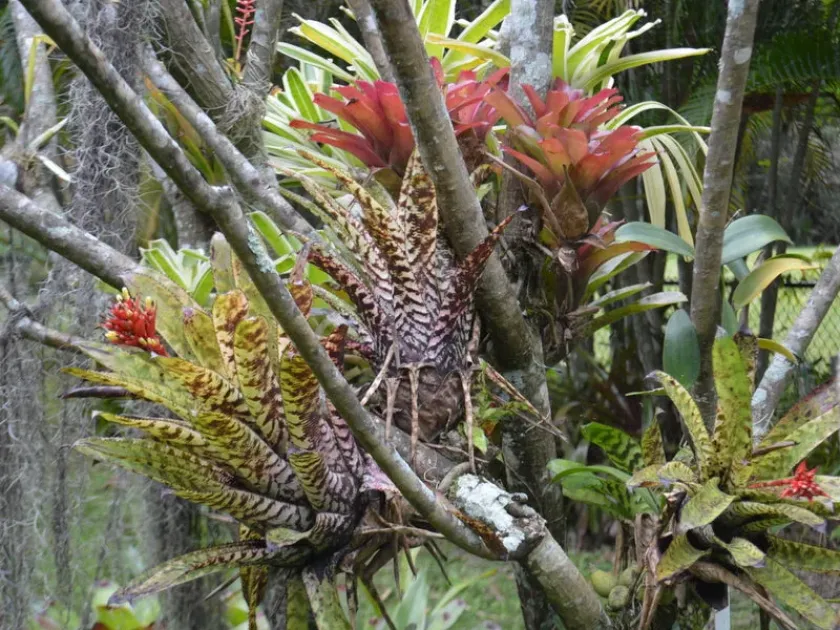
The botanical structure is defined by a rigid rosette of leathery leaves featuring prominent marginal spines. The foliage is highly prized for its unique variegation, often displaying dark, marble-like markings that intensify under optimal light conditions, serving as a primary ornamental trait.
The cultural requirements demand bright, filtered light. While the plant can tolerate lower light levels, its characteristic coloration and compact growth habit are best maintained in well-lit conditions, avoiding direct midday sun which can scorch the foliage.
Soil management for this cultivar requires a well-draining, airy medium. A mixture of pine bark, perlite, and sphagnum moss is ideal to simulate the epiphytic substrate, ensuring that the root system receives sufficient aeration while retaining necessary moisture.
Effective irrigation involves filling the central cup of the rosette with clean, soft water. It is essential to flush the cup periodically to prevent mineral buildup and bacterial growth, maintaining a clean environment for the plant's physiological processes.
Main diseases and pests
Mealybugs are the most common pests, often clustering in the tight crevices between the leaves where they are difficult to reach. Regular monitoring and the application of systemic insecticides are standard procedures for managing outbreaks in nursery environments.
Root rot and crown rot represent the primary pathological risks, usually induced by poor drainage or low-temperature conditions coupled with excess moisture. Ensuring proper airflow around the base and avoiding waterlogging are critical for long-term health.