
Aechmea fosteriana
Aechmea fosteriana L. B. Sm.
Description
Growing requirements
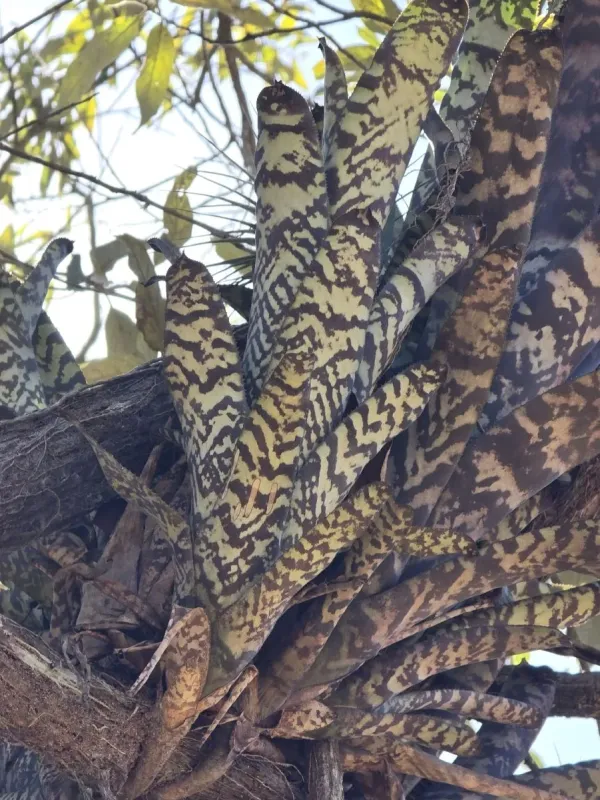
Aechmea fosteriana is an epiphytic species belonging to the Bromeliaceae family, native to the tropical forests of Brazil. This plant is highly valued for its striking, architectural rosette of tough, strap-shaped leaves often marked with distinct patterns.
To thrive in cultivation, this plant requires bright, filtered light. Direct sunlight should be avoided as it can scorch the foliage, while insufficient light may result in the loss of vibrant leaf coloration and weakened growth structures.
The ideal growing medium must be highly porous and well-draining, similar to an orchid mix. A combination of pine bark, perlite, peat moss, and charcoal is recommended to ensure that the root system has adequate airflow and drainage.
Irrigation for this species involves a specific technique where water is poured into the central tank formed by the leaves. It is crucial to use soft, room-temperature water and occasionally flush the tank to prevent the buildup of mineral salts and decaying debris.
High humidity is essential for the healthy development of Aechmea fosteriana. Regular misting of the foliage is beneficial, especially in environments where central heating or air conditioning reduces the ambient moisture levels in the air.
Main diseases and pests
Root rot is the most significant threat to the plant, primarily caused by waterlogged soil and poor drainage. Proper potting technique and ensuring that the substrate does not stay saturated are the primary methods for preventing this condition.
Pests such as mealybugs and scale insects frequently infest the hidden crevices of the leaf rosettes. If detected, they should be physically removed using a cotton swab dipped in alcohol or treated with appropriate horticultural oils or systemic insecticides.
Spider mites can become a nuisance in dry indoor environments. Maintaining proper humidity levels serves as a preventative measure, but should an infestation occur, a consistent misting schedule or miticide application is necessary.
Fungal leaf spot diseases can manifest if there is poor air circulation around the plants. Providing good ventilation and avoiding overcrowded conditions will significantly reduce the likelihood of these pathogens taking hold on the foliage.
It is important to understand the life cycle of the plant: once a rosette has finished blooming, it will slowly decline while producing offsets or "pups" at the base. This is a natural physiological process and should not be mistaken for a disease or maintenance failure.