
Job's tears
Coix lacryma-jobi L. var. ma-yuen (Rom. Caill.) Stapf
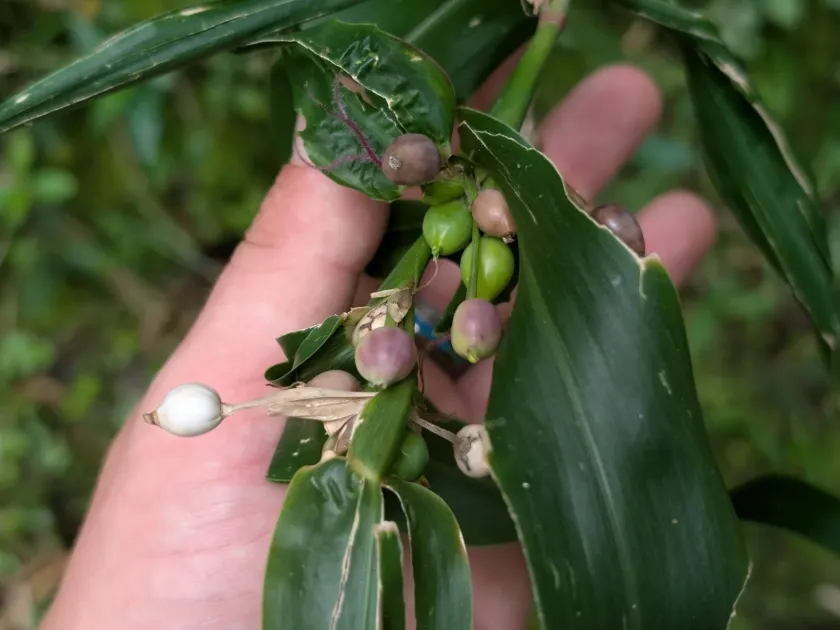
Description
Sowing dates
Job's tears is a warm-season crop that requires stable, warm temperatures to germinate successfully. Sowing typically begins in late spring, once the soil has sufficiently warmed and the danger of frost has completely passed for the season.
The seeds should be planted at a depth of 3 to 5 centimeters in well-prepared, loose soil. Maintaining adequate spacing between rows, typically around 50 to 60 centimeters, is essential to ensure proper airflow and to allow for easier weeding and maintenance throughout the growth period.
In regions where the growing season is relatively short, starting seeds indoors in trays is a common practice. Seedlings can be transplanted into the field after about a month, which significantly helps in achieving maturity before the onset of autumn chill.
Adequate soil moisture is critical during the initial germination phase. Farmers should ensure the soil remains consistently damp until the seedlings have established a strong root system, as young Job's tears plants are somewhat sensitive to drought conditions.
Crop rotation is recommended to prevent soil exhaustion and to break the cycle of potential pathogens. Planting Job's tears after legumes can provide a nutritional boost to the soil, improving the overall vigor of the crop without relying on excessive synthetic fertilizers.
Growing requirements
Belonging to the Poaceae family, Job's tears thrives in tropical and subtropical climates where heat and moisture are abundant. The plant requires a full-sun location to produce optimal yields and to support its robust vegetative growth.
The ideal soil for this crop is fertile, well-draining, and rich in organic matter. While the plant is known to be tolerant of wet feet, it performs best in soils where there is no prolonged waterlogging, as proper aeration is necessary for deep root development.
Job's tears is highly responsive to regular irrigation, particularly during the stages of tillering and the emergence of the panicles. During these peak phases, consistent water availability is the primary factor that dictates the density and size of the grain harvest.
Effective weed management is necessary during the early stages of the plant's life cycle. As Job's tears grows slowly at the start, manual or mechanical cultivation between rows is required to prevent competitive weeds from stunting the crop's development.
Fertilization should be managed carefully, providing a balance of nutrients. Nitrogen is beneficial during the early vegetative stage, while increased levels of phosphorus and potassium support the flowering and grain-filling stages later in the season.
Yield
The yield of Job's tears can vary significantly based on environmental conditions and the intensity of management practices. In optimal farming conditions, producers can expect a substantial harvest that is both reliable and consistent across the growing season.
The grain-filling stage is the most sensitive period for the plant; stable weather conditions during this time are essential for high-quality outcomes. Excessive rainfall or high humidity during maturation can potentially impact the final quality of the grain.
Pollination efficiency is enhanced in open fields with moderate air movement, which ensures that the panicles fill evenly. High-quality harvests are characterized by uniform grain size and a hard, lustrous outer shell that is typical for mature seeds.
Post-harvest processing is a key component of the yield equation. Since the grain is encased in a tough, stony hull, effective mechanical hulling is required to separate the edible kernel from its protective casing, which can be a labor-intensive process.
Farmers often measure yield not just by grain weight, but also by the quality of the straw. The stalks and leaves serve as an excellent supplementary feed for livestock, making Job's tears a highly versatile crop for integrated farm systems.
Main diseases and pests
Fungal diseases, particularly those affecting the inflorescences, are the primary biological threat to Job's tears. These pathogens can cause significant damage to the panicles if the humidity levels remain high during the flowering stage.
Insect pests, such as stem borers, can impact the structural integrity of the plants. Regular monitoring and the application of integrated pest management strategies are crucial to minimize losses and prevent the need for broad-spectrum chemical treatments.
Maintaining good field hygiene is the best preventative measure against disease outbreaks. This includes removing crop debris from previous cycles and ensuring adequate plant density to allow for good sunlight penetration and air circulation.
In cases where environmental pressure from pathogens is high, selective application of fungicides may be necessary. It is important to adhere to safety regulations and pre-harvest intervals to ensure that the final grain product remains safe for consumption.
Proper storage conditions are equally important to protect the harvest from storage pests. Grain should be stored in cool, dry, and well-ventilated areas to prevent the growth of molds and the infestation of beetles that often plague stored cereal grains.
Harvesting
Harvesting is initiated when the grain reaches physiological maturity, characterized by a change in panicle color and the attainment of maximum hardness. In commercial operations, combines are calibrated to thresh the crop without crushing the grain.
For smaller scales or hand-harvested crops, picking the panicles as they ripen is a viable option to ensure that no grain is lost to shattering. This allows for a more careful selection of only the most mature and healthy seed clusters.
The harvested grain undergoes a thorough drying process to reduce moisture content to safe levels for long-term storage. This stabilization step is vital to prevent deterioration and to maintain the nutritional and medicinal properties of the kernels.
After drying, the grain is cleaned to remove husks, debris, and any immature seeds. This process ensures a clean, uniform product that meets quality standards for food processing or herbal medicine production.
The waste products, including hulls and empty panicles, can be repurposed as high-quality compost or mulch. By utilizing all parts of the plant, farmers can enhance the overall sustainability and efficiency of their Job's tears production systems.