
Adenodolichos rhomboideus
Adenodolichos rhomboideus
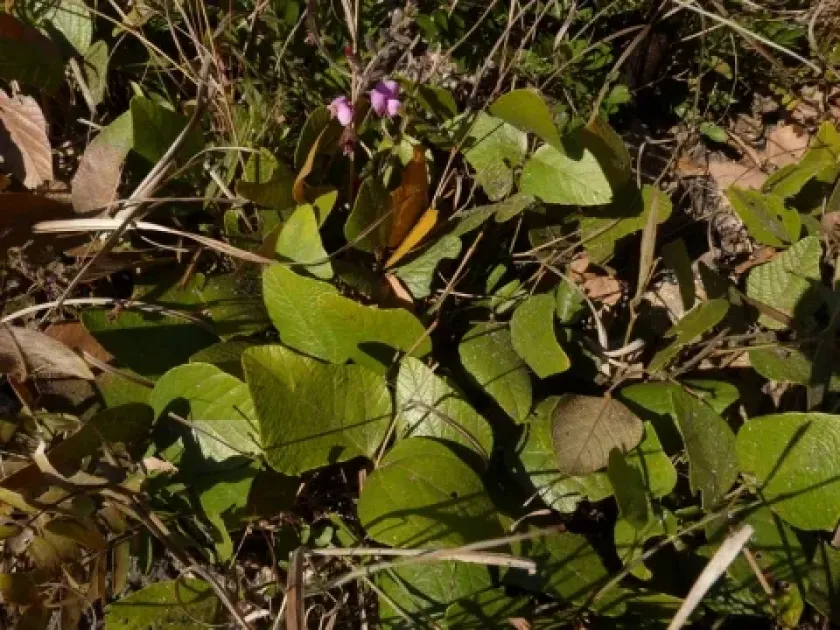
Description
Growing requirements
Adenodolichos rhomboideus is a perennial herbaceous plant belonging to the Fabaceae family. Native to the tropical regions of Africa, this species has evolved to thrive in the complex environment of savannas and wooded grasslands, showing high resilience to environmental stressors.
The plant requires well-drained soils to maintain optimal growth and avoid root rot during wet seasons. It is highly adapted to tropical climates characterized by distinct dry and rainy periods, demonstrating a significant ability to endure drought conditions throughout its life cycle.
Botanically, the species is recognized by its distinct rhomboid-shaped leaves, a key identifying feature that also aids in water conservation. Its growth habit can vary, often appearing as a trailing or semi-erect shrub that provides effective soil cover within its natural habitat.
As a legume, it plays a vital role in nitrogen fixation. By forming symbiotic relationships with specialized bacteria, it enriches the soil with nitrogen, which helps sustain the surrounding vegetation and improves the overall productivity of the agro-ecosystem in which it grows.
The geographical distribution of Adenodolichos rhomboideus spans various African countries including Angola and the Congo region. It thrives under full sun exposure, which is necessary for the plant to maximize its photosynthetic capacity and biomass production during the growth season.
Yield
In terms of agricultural utility, the primary focus for Adenodolichos rhomboideus is forage production. The foliage is rich in proteins and essential minerals, making it a valuable feed source for livestock, particularly in rural farming systems that rely on natural grazing resources.
Beyond its use as fodder, the plant serves as an excellent ground cover. Its dense foliage and robust root system help protect the soil surface from high-intensity tropical rain, significantly reducing the risk of water erosion on agricultural plots and hilly terrain.
Management practices for this crop include rotational grazing, which ensures the plant has sufficient time to recover between sessions. Because it is a perennial, appropriate management allows for multiple harvests of biomass throughout the year, provided moisture levels remain adequate.
While large-scale industrial cultivation of this species is limited, local smallholders often incorporate it into agroforestry and crop rotation schemes. This approach leverages the nitrogen-fixing properties of the plant to enhance the yield of subsequent crops in the rotation cycle.
Future agricultural prospects for Adenodolichos rhomboideus involve evaluating its potential for soil rehabilitation in degraded landscapes. Its combination of drought resistance, nitrogen fixing ability, and fast growth makes it a promising candidate for sustainable land management projects.