
Adenocaulon bicolor
Adenocaulon bicolor
Description
Growing requirements
Adenocaulon bicolor, commonly known as the American trail plant, is a perennial herb belonging to the Asteraceae family. It is native to the woodlands of North America, typically thriving in damp and shaded forest environments.
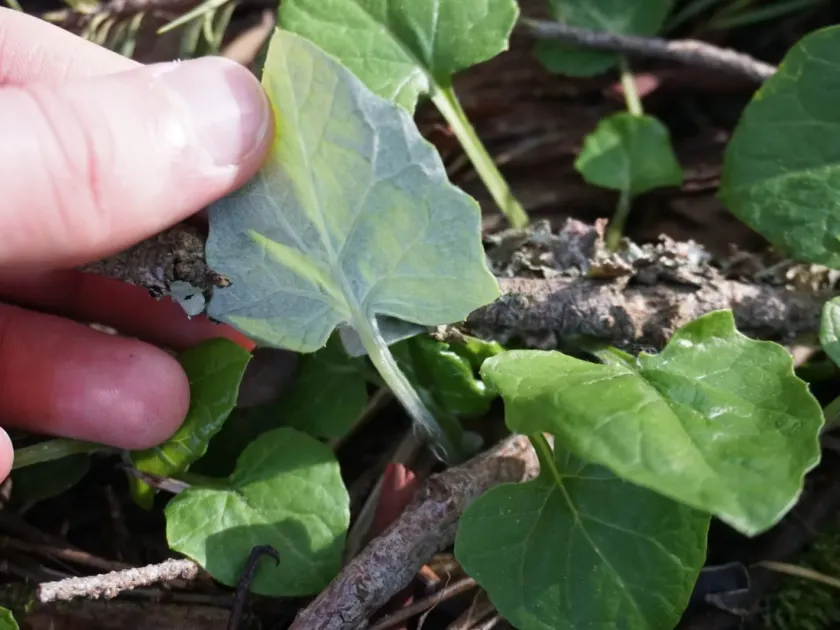
The plant is highly recognized for its foliage: the leaves are deep green on top and feature a dense, white-woolly tomentum on the underside. This distinctive trait makes it an excellent choice for adding texture to shady garden borders.
Successful cultivation requires a location with partial to full shade, as the foliage can be easily scorched by direct sunlight. The plant prefers environments with cool temperatures and stable humidity levels throughout the growing season.
Soil requirements include rich, well-draining loams that stay moist but are not waterlogged. Incorporating organic matter such as peat or leaf mold is recommended to emulate the forest floor conditions where the plant originates.
In landscaping, Adenocaulon bicolor is valued for its unique aesthetic and ability to fill gaps in shady areas. While not a commercial crop in the traditional agricultural sense, it remains a specialty plant for shade-loving perennial collectors.
Main diseases and pests
The main threats to the plant health include fungal infections like powdery mildew, especially if the air circulation around the plants is inadequate. Maintaining proper spacing and removing debris can significantly reduce infection risks.
Root rot is a major physiological challenge caused by heavy, compacted soils that trap moisture around the rhizomes. Ensuring a porous soil structure is essential for the long-term survival and vigor of the plant.
Slugs and snails are the most prominent pests, often causing significant foliage damage overnight. Implementing physical barriers or organic bait stations is a standard procedure in protecting this plant from herbivory.
Environmental stress, particularly prolonged drought, will cause the foliage to wilt and eventually desiccate. If the natural environment cannot maintain sufficient humidity, artificial irrigation becomes a necessity for plant viability.
Integrated pest management, including regular monitoring and the use of targeted biological agents, helps keep the plant healthy. Avoiding chemical fertilizers with high nitrogen content is also advised to prevent unnaturally rapid, weak tissue growth.