
Pointed spear-moss
Acrocladium cuspidatum
Description
Growing requirements
Acrocladium cuspidatum, known as pointed spear-moss, is a species of moss belonging to the Lembophyllaceae family. It is widely distributed across the Northern Hemisphere, typically found in damp, nutrient-rich environments.
This species thrives in wetlands, marshes, and damp grasslands. It has a high preference for areas with consistent moisture, such as the banks of streams, ponds, or areas where groundwater remains close to the surface throughout the year.
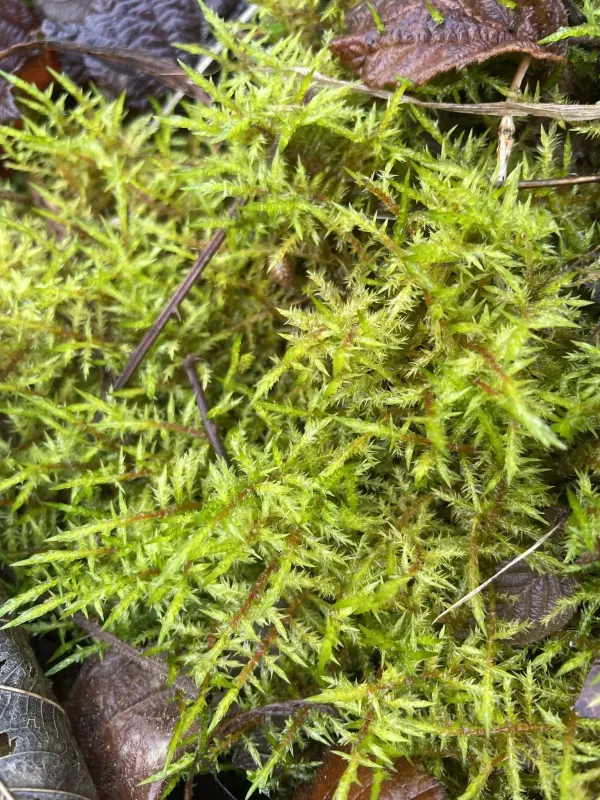
Botanically, it forms loose, yellowish-green cushions. The stems can grow up to 15 cm in length, featuring closely appressed leaves that end in a sharp point. This morphology is an adaptation to capture and retain moisture from the surrounding environment.
The moss requires a specific range of soil acidity, generally favoring neutral to slightly acidic conditions. It cannot tolerate extreme dryness, making it an excellent indicator species for high water tables in agricultural landscapes.
Regarding climate, it prefers temperate environments where humidity levels remain relatively high. It is rarely found in arid regions, as its physiological survival mechanism is entirely dependent on water availability.
Yield
In terms of agricultural utility, Acrocladium cuspidatum is not a harvested crop. Its significance lies in its role as a bio-indicator for land drainage status. Its presence usually suggests that a field is too wet for effective crop cultivation.
In landscaping and horticultural settings, this moss is used to add texture and a green ground cover to damp, shaded areas or water-feature peripheries. Its ability to form a dense mat makes it aesthetically pleasing for specific moist garden designs.
Ecologically, the moss contributes to soil stabilization. It binds the surface layer of damp soils, preventing erosion and providing a micro-habitat for various microorganisms and soil invertebrates.
There is no commercial yield associated with the biomass of this moss, though research into its role in heavy metal sequestration suggests potential future use in environmental remediation projects.
As a pasture plant, it is generally considered a nuisance. It competes with nutritious forage grasses, and large patches of the moss are often addressed through surface water management and soil aeration.
Main diseases and pests
The primary threat to the stability of Acrocladium cuspidatum populations is large-scale land drainage and agricultural land reclamation. When the hydrological balance is shifted towards drier conditions, the moss dies off quickly.
While natural pests like nematodes can inhabit the cushions, they rarely cause total population collapse. The biggest mechanical threats come from trampling by livestock, which physically disrupts the delicate moss structure.
Fungal pathogens can occasionally affect the moss, usually triggered by stagnant water conditions without adequate oxygenation. This leads to decay, particularly in the lower parts of the moss mats.
Chemical pollutants are highly detrimental. The moss is sensitive to high concentrations of nitrates and herbicides, which alter the delicate chemical balance of its native wetland habitat.
Competition from taller vascular plants, such as reeds and sedges, acts as an evolutionary pressure. As these plants grow, they can shade out the moss, forcing it to migrate to more open, light-available areas.