
Ackama rosifolia
Ackama rosifolia
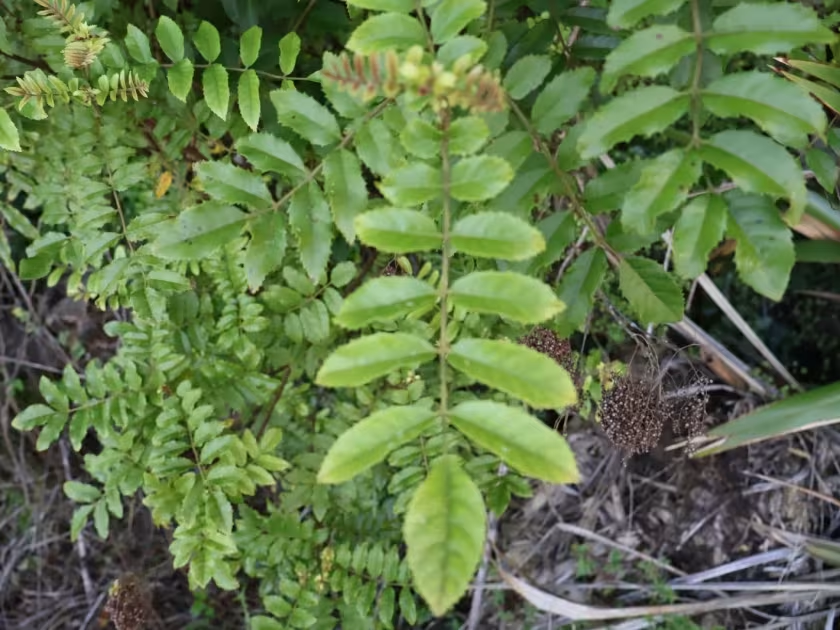
Description
Growing requirements
Ackama rosifolia belongs to the Cunoniaceae family and is known for its elegant foliage and evergreen nature. In its native habitat, it grows as a resilient tree, often found in temperate rainforest environments of New Zealand.
The cultivation of this species requires a climate that mimics its original habitat. It thrives in regions with mild temperatures, consistent rainfall, and high humidity, avoiding both extreme frosts and prolonged summer droughts.
Soil requirements are critical for the health of Ackama rosifolia. It prefers deep, nutrient-rich, and well-draining loamy soils. Growers must ensure that the planting site has excellent drainage, as the roots are highly susceptible to rot in waterlogged substrates.
In terms of light exposure, the plant performs best in a position that provides morning sun and afternoon shade, particularly in its juvenile stage. As the tree matures, it becomes more tolerant of full sun, provided that moisture levels are strictly managed.
Economically, this plant is valued for its unique timber and its ornamental potential in specialized landscape projects. Its historical significance in New Zealand forestry highlights its utility, although its primary current use is decorative.
Main diseases and pests
The most common health issues for Ackama rosifolia are fungal root infections, often exacerbated by poorly drained soils. Overwatering can lead to rapid decline, making effective drainage management a top priority for any grower.
Pests, particularly scale insects and sap-sucking aphids, frequently target the succulent growth of young plants. If left unchecked, these infestations can stunt development and facilitate the entry of secondary diseases.
Leaf spot diseases are occasionally observed during periods of high humidity and limited air movement. Improving spacing between trees and thinning branches can significantly reduce the incidence of these fungal pathogens by promoting better airflow.
Nutritional imbalances can manifest as chlorosis or stunted growth, making the tree more susceptible to environmental stress. Applying a balanced, slow-release fertilizer can help maintain robust health and natural resistance to common threats.
Biotic threats also include browsing by introduced herbivores, such as deer or possums in its native range. Protecting young trees with wire mesh or trunk guards is essential until the bark hardens sufficiently to deter animal damage.