
Acharagma aguirreanum
Acharagma aguirreanum
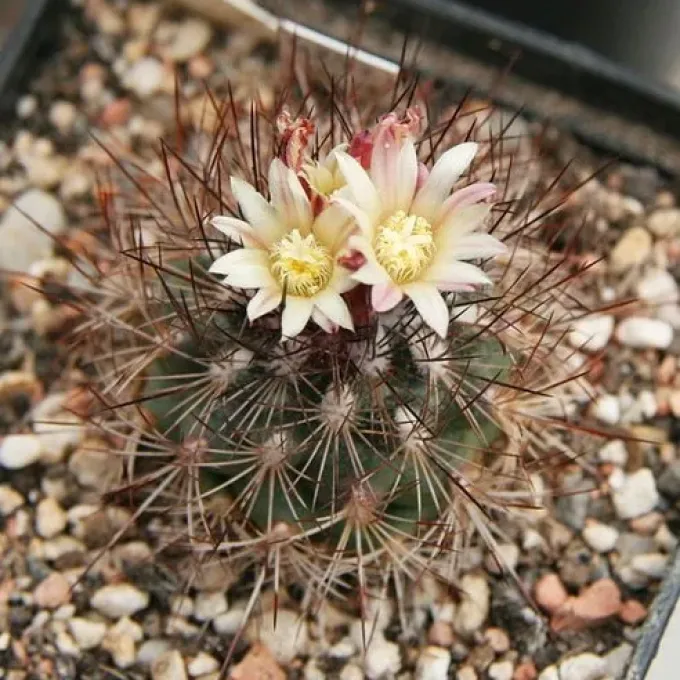
Description
Growing requirements
Acharagma aguirreanum is a distinct, small-bodied cactus species belonging to the Cactaceae family, native to the arid rocky regions of Coahuila, Mexico.
In cultivation, this plant requires a highly exposed position with direct, bright sunlight to maintain its characteristic compact shape and dense spine development.
The substrate must be extremely porous and well-draining, typically consisting of a mix of coarse sand, perlite, and a minimal amount of inorganic soil amendments.
Temperature control is essential; the plants thrive in warm environments during the growing season but require a cooling period during winter to support dormant health.
Watering practices must be disciplined, ensuring the soil dries out completely between waterings to prevent root rot, which is the most common cause of failure for this species.
Main diseases and pests
Root and stem rot are the primary threats to Acharagma aguirreanum, usually triggered by excessive soil moisture combined with poor air circulation or low light.
Mealybugs and spider mites are the most common pests that can infest the plant, settling within the crevices of the tubercles where they are hard to detect.
Consistent monitoring of the cactus base is necessary, as early signs of tissue softening can indicate an impending fungal infection that requires immediate intervention.
Application of appropriate systemic insecticides and fungicides should be done with care, ensuring the plant tissue is not scorched or damaged by aggressive chemicals.
Maintaining high hygiene standards in the greenhouse or collection area is vital to prevent the spread of pests and diseases among sensitive succulent collections.