
Acanthospermum hispidum
Acanthospermum hispidum DC.
Description
Growing requirements
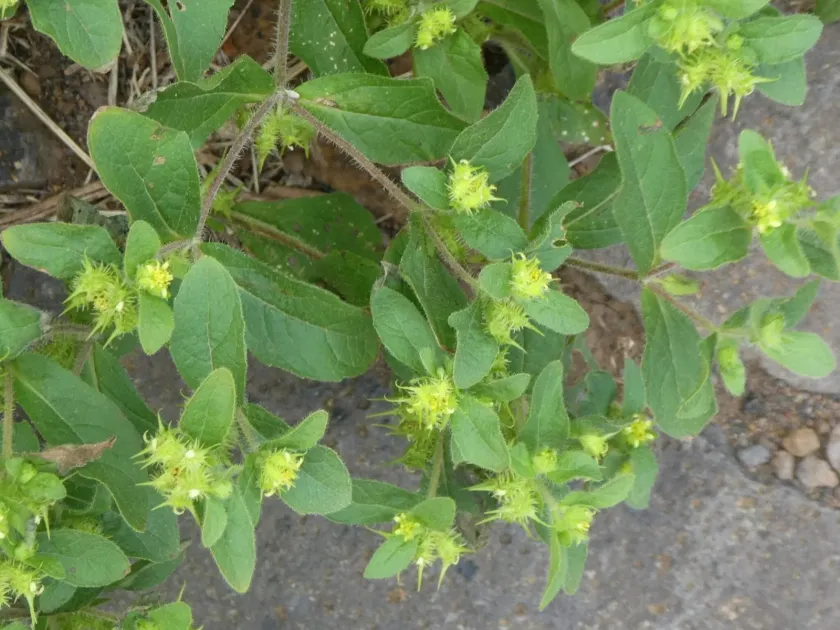
Acanthospermum hispidum, commonly known as bristly starbur, is an annual plant belonging to the Asteraceae family. It is recognized globally as a serious agricultural weed, particularly in tropical and subtropical climatic zones.
Originating from South America, the species has naturalized in various regions including Africa, Asia, and Australia. Its success as a weed is attributed to its rapid growth rate and tolerance to diverse environmental conditions.
The plant thrives in open, sunny habitats and is frequently found in disturbed soils, cultivated fields, and overgrazed pastures. It is capable of growing on nutrient-poor soils, making it a resilient competitor against conventional crops.
The biological success of Acanthospermum hispidum is largely due to its fruit, which is covered in sharp, hooked spines. These spines ensure the dispersal of seeds by adhering to clothing, livestock fur, and agricultural machinery.
Agronomic management requires consistent monitoring of field margins and crop rows. Because the plant produces a large quantity of seeds that can remain viable in the soil for years, long-term rotation strategies are essential.
Main diseases and pests
The primary threat posed by this weed is the reduction of crop yields through competition for limited nutrients, soil moisture, and sunlight. In dense infestations, crop growth can be severely stunted or entirely suppressed.
The species acts as a reservoir for various plant pathogens and pests, which can cause significant damage to commercial crops. Monitoring for these vectors is a critical component of integrated pest management in infested areas.
Chemical control is a common approach, but efficacy depends on the timing of herbicide application. Younger plants are generally more susceptible to treatment before they develop their robust, spiny seed heads.
Mechanical control measures should be implemented before the onset of flowering and seed maturation. If plants are cut after seed heads have formed, it can inadvertently lead to further distribution of seeds across the field.
Strict phytosanitary practices are the most effective method for prevention. Ensuring that farm equipment is cleaned between operations in different fields is vital to preventing the spread of Acanthospermum hispidum.