
Acanthospermum australe
Acanthospermum australe (Loefl.) Kuntze
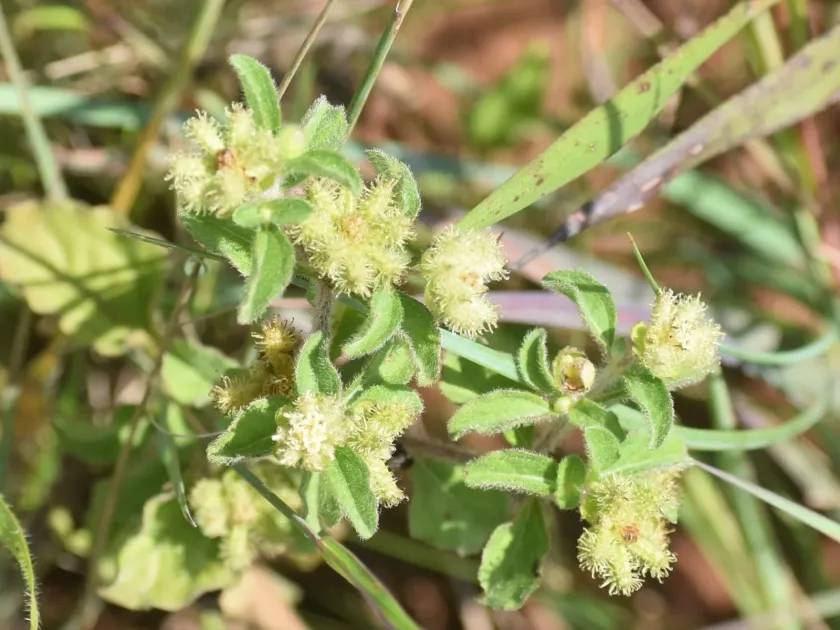
Description
Growing requirements
Acanthospermum australe, a member of the Asteraceae family, is a herbaceous plant widely recognized in agronomy as an invasive weed rather than a cultivated crop. It is native to South America, where it has evolved to thrive in diverse tropical and subtropical environments.
The plant is characterized by its spreading or semi-erect growth habit and glandular pubescence. Its most distinctive feature is the production of burr-like fruits with hooked spines, which are highly efficient at adhering to animal fur and clothing, facilitating rapid spread across agricultural landscapes.
Environmental requirements for this species include high light intensity and adequate moisture during the early vegetative stages. While it adapts to various soil textures, it shows a preference for disturbed, nutrient-rich soils often found in cultivated fields and overgrazed pastures.
In terms of agricultural significance, this plant is generally viewed as a pest. It outcompetes crops for water, nutrients, and sunlight, often leading to reduced yields if not managed early in the season. Its presence in pastures is particularly detrimental due to the mechanical damage its spines cause to livestock.
The resilience of the plant is tied to its high seed production and prolonged viability of seeds in the soil bank. This makes long-term management critical for maintaining productivity in fields where the weed has established a foothold.
Main diseases and pests
Managing A. australe requires a multifaceted approach focused on preventing the maturation of its burrs. Mechanical control, such as manual weeding or mowing, is effective if performed before the plant reaches the flowering and fruiting stage.
Chemical control involving selective herbicides is a standard practice in commercial agriculture. Proper timing of application is crucial, as younger plants are significantly more susceptible to control measures than mature ones.
While the plant is hardy, it can be susceptible to common fungal diseases that affect the Asteraceae family during prolonged periods of high humidity. However, these pathogens are rarely sufficient to suppress population growth naturally.
The main threats posed to farming operations include contamination of harvested forage and reduced quality of wool in sheep farms. The spines can cause severe irritation and infection in livestock, making fields infested with this weed less desirable for grazing.
A proactive strategy includes field monitoring, equipment sanitation to prevent seed translocation, and the use of vigorous cover crops to shade out the weed seedlings. Implementing these steps ensures better crop health and protects overall yield potential.