
Narrow-leaf acanthopanax
Acanthopanax stenophyllus
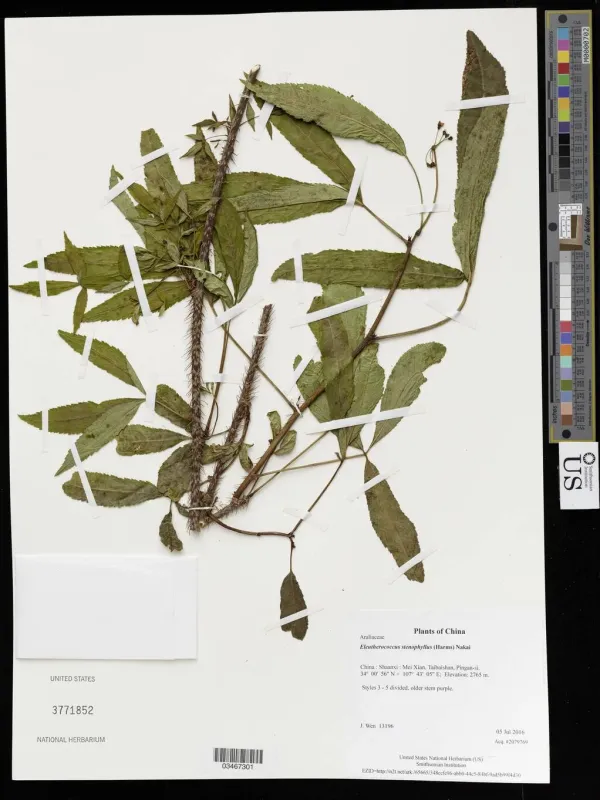
Description
Sowing dates
Sowing of narrow-leaf acanthopanax seeds is best performed in the autumn, allowing the seeds to undergo natural stratification, which is essential for uniform germination.
When sowing in artificial conditions, seeds require a prolonged cool stratification process at temperatures between 0°C and 5°C for several months to break dormancy.
The seeds should be sown in well-prepared, loose, and slightly acidic soil at a depth of about 2 centimeters to ensure protection from adverse weather.
For large-scale cultivation, seeds are sown in rows with a distance of at least 50 centimeters, which allows for efficient mechanical weed control later on.
Maintaining high humidity and a consistent temperature during the early spring is critical for achieving a good emergence rate of the seedlings.
Growing requirements
Narrow-leaf acanthopanax, a member of the Araliaceae family, thrives in areas with partial shade and protection from extreme wind exposure.
The crop requires fertile, well-draining soils with high organic matter content to support its vigorous root system and rapid vegetative growth.
Irrigation management is vital, as the plant is sensitive to both drought and waterlogging; consistent, controlled soil moisture is the key to success.
The plant demonstrates good adaptability to temperate climates, though mulching during the first winter is recommended to protect the young root systems.
Adequate spacing between plants is required to ensure proper air circulation, which significantly reduces the risk of foliar diseases during the summer season.
Yield
The primary economic output of this culture consists of roots and leaves, which are highly valued for their adaptogenic medicinal properties.
Root harvesting is typically scheduled when the plants reach 5 to 7 years of age, ensuring the highest concentration of active compounds like saponins.
Yield efficiency is directly proportional to the fertility management and pest control practices implemented throughout the entire growing cycle.
Regular leaf harvesting can be performed annually, providing a sustainable income stream while the roots continue to mature beneath the surface.
The quality of the final dried product depends on the harvesting timing and the processing methods used immediately after removing the raw material from the soil.
Main diseases and pests
Common pests such as aphids and spider mites can severely impact the plant's health, particularly during hot and dry spells in mid-summer.
Fungal infections, including root rot and leaf spots, represent a significant threat to crops grown in soils with poor drainage or insufficient aeration.
Integrated pest management strategies are recommended, focusing on early detection and the use of environmentally safe biological controls.
Weeds are a significant competitor for resources; thus, maintaining a weed-free zone around the root collar is essential to prevent plant stress.
Sanitation practices, such as removing infected leaves or pruning damaged branches, are crucial for maintaining a healthy and productive plantation.
Harvesting
Harvesting of the roots takes place late in the autumn after the plant has entered its dormant phase, ensuring the integrity of the bioactive components.
Once harvested, the roots are thoroughly cleaned and sliced into smaller pieces to facilitate efficient drying in temperature-controlled environments.
Leaves should be harvested during the peak flowering stage to ensure the highest levels of essential nutrients and phytochemicals are captured.
After drying, the raw material must be stored in cool, dark, and well-ventilated conditions to maintain its shelf life and therapeutic potency.
Professional sorting and quality control post-harvesting allow for the removal of impurities, ensuring the product meets industry standards.