
Abrus precatorius
Abrus precatorius L.
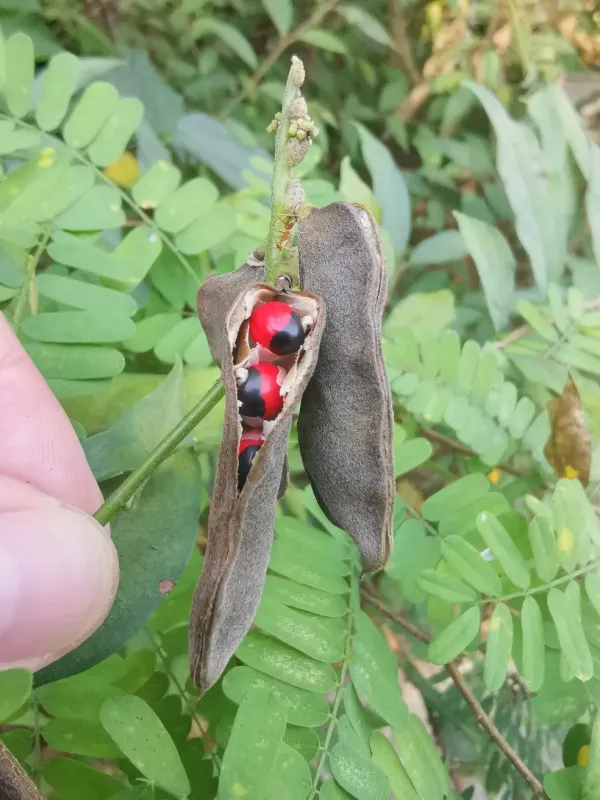
Description
Sowing dates
Abrus precatorius is a perennial woody vine belonging to the Fabaceae family. In tropical regions, sowing occurs at the beginning of the growing season when temperatures are consistently warm, typically exceeding 22 degrees Celsius.
The seeds possess a hard, impermeable seed coat, which necessitates mechanical scarification to initiate the germination process. Without this treatment, the germination rate is significantly reduced due to water dormancy.
Seeds should be planted at a depth of 2 to 3 centimeters in a well-draining medium. Consistent moisture levels must be maintained during the initial phase, as drying out can cause the embryonic root to fail.
Using nursery trays with a peat-based substrate is the preferred method for producing seedlings. This minimizes transplant shock later, as Abrus precatorius is known to have sensitive root systems that do not respond well to disturbance.
The establishment phase requires careful observation of spacing, as the vine exhibits vigorous growth once it successfully anchors itself to a vertical support structure.
Growing requirements
This species thrives in high-light environments and requires full sun to partial shade to achieve optimal vegetative growth. Inadequate light levels lead to etiolation and a significant decrease in biomass production.
The soil profile should be sandy-loam or loamy-sand with excellent internal drainage. High water retention in the root zone is detrimental and frequently leads to the development of opportunistic fungal pathogens.
A soil pH between 6.0 and 7.0 is considered ideal for nutrient availability. Supplementing the growing medium with organic matter supports the plant's natural nitrogen-fixing symbiotic processes.
Thermal requirements are strict: the crop is not frost-tolerant and requires temperatures above 15 degrees Celsius for sustained metabolic activity. It is best suited for zones that mimic its native tropical climate.
Water management involves regular irrigation during the growth phase, while shifting to restricted watering if the plant enters a period of dormancy, ensuring the soil profile dries out sufficiently between applications.
Main diseases and pests
Fungal diseases, including powdery mildew and anthracnose, represent the primary agronomic threats. These are often exacerbated by poor air circulation and high humidity levels in controlled environments.
Pest pressures are primarily caused by aphids, spider mites, and scale insects, which can quickly deplete the vigor of the vine. Integrated pest management strategies are recommended to keep populations below threshold levels.
Root-knot nematodes can pose a significant challenge if grown in soil without proper crop rotation cycles. Using sterilized substrates in greenhouse production can effectively mitigate this specific soil-borne risk.
Physical protection against high winds is necessary for outdoor cultivation to prevent structural damage to the vines. Strong, weather-resistant trellising is mandatory for commercial-scale production.
Given the high toxicity of the seeds containing the ribosome-inactivating protein abrin, strict safety protocols must be followed during harvesting and processing. Handling precautions should be mandatory to prevent accidental ingestion or contact.