
Abobra tenuifolia
Abobra tenuifolia
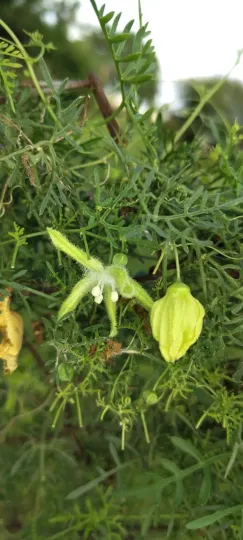
Description
Sowing dates
Abobra tenuifolia is a perennial heat-loving vine, which makes it crucial to sow seeds only after the soil has thoroughly warmed up in spring.
The optimal planting time occurs in late spring, once the threat of late frosts has completely passed, as the plant is sensitive to cold temperatures.
For more vigorous growth and earlier flowering, it is highly recommended to start seeds indoors in a greenhouse or cold frame.
Seeds should be sown in a nutrient-rich substrate approximately 4–6 weeks before the intended date of transplantation into the open field.
Maintain a sowing depth of 1–2 centimeters and ensure constant moisture along with a soil temperature ranging from +20 to +25 degrees Celsius.
Growing requirements
Belonging to the Cucurbitaceae family, this crop has high light requirements and thrives best in sunny, sheltered locations protected from strong winds.
The soil should be light, fertile, and rich in organic matter, with a neutral pH level to ensure proper nutrient uptake and plant health.
While the plant needs a consistent moisture supply, it is critical to avoid waterlogging, which can easily trigger root rot and decline.
Vertical supports are essential for this plant, as its tendrils allow it to climb rapidly and occupy significant vertical space in the garden.
Regular fertilization with balanced NPK fertilizers, particularly those rich in potassium and phosphorus, supports robust growth during the season.
Yield
Abobra tenuifolia is primarily valued for its highly decorative, feathery, fern-like foliage and its attractive small, bright red berries.
The fruits remain on the vines for an extended period, providing a striking visual contrast against the deep green foliage throughout the season.
Agricultural yield is not measured in traditional food output, as the primary utility of this plant is found in ornamental and landscape design.
Under favorable climatic conditions and proper care, a single vine is capable of producing a large volume of berries by late summer and autumn.
The seeds of the Abobra have excellent germination rates, allowing growers to easily maintain their own seed bank for the following growing season.
Main diseases and pests
Spider mites represent a significant threat to young shoots, especially during hot and dry summer months when they reproduce very rapidly.
In conditions of high humidity combined with poor airflow, the plant may suffer from powdery mildew, manifesting as white spots on the leaves.
The root system is particularly susceptible to decay if the soil remains excessively wet, especially during spells of lower nighttime temperatures.
Keeping the base of the plant free from debris and ensuring proper weed control helps minimize the risk of pest and disease outbreaks.
If symptoms of fungal infection appear, it is recommended to apply appropriate bio-fungicides or chemical treatments following label instructions.
Harvesting
Harvesting of the fruit should be performed during the stage of biological maturity, characterized by a deep and intense red color of the berries.
For decorative arrangements, entire stems laden with fruit can be harvested and used to create unique floral or autumn-themed displays.
Harvesting must be completed before the first autumn frost, as freezing temperatures quickly damage the structure and appearance of the fruit.
For seed production purposes, the berries are left on the vine until they become soft, indicating that the seeds have reached full maturity.
After collection, the seeds should be cleaned, dried in a cool dark place, and stored in breathable paper bags in a low-humidity environment.