
How much does cash and settlement services cost in 2026 for agribusiness: how to calculate the real cost of the tariff
How much does cash and settlement services cost in 2026, what makes up the tariff price, and how businesses can calculate the real costs of a current account, acquiring, transfers, and cash operations. Suitable for sole proprietors, LLCs, and agricultural businesses
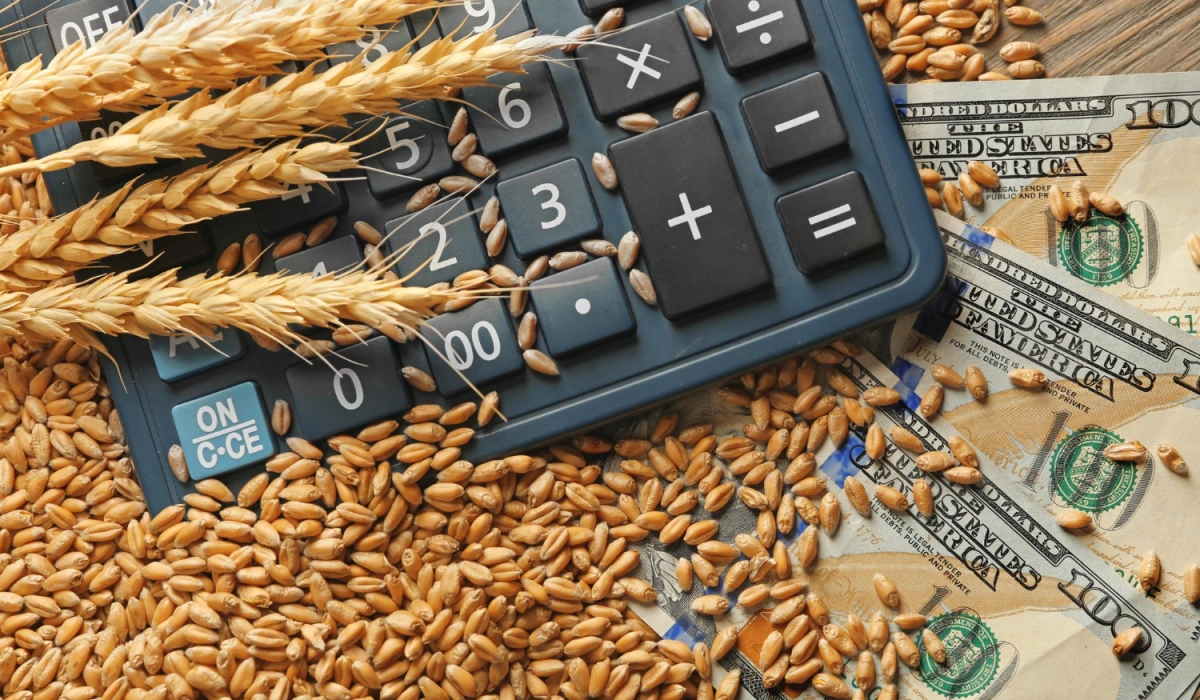
If a farm’s turnover changes throughout the year, procurement costs rise, and seasonal payments appear, cash management services help estimate in advance how much a business will actually spend on a current account, transfers, cash deposits, acquiring, and other banking services.

Why the price of cash management services almost never equals the tariff price
In 2026, there are still many offers on the market with service plans starting from 0 rubles per month. According to the Banks.ru catalog, among tariffs for sole proprietors there are options with a monthly fee starting from 0 rubles, and the data in the listing is marked as актуальные на 23.03.2026. But this is only the starting figure, not the full cost of обслуживания.
The banks themselves show the same logic. In its tariff calculator, Alfa-Bank asks clients to consider not only account maintenance, but also transfers to legal entities, transfers to individuals, cash withdrawals and deposits, acquiring parameters, and even foreign economic activity. In other words, the real cost of cash management services is made up of operations, not just one line in the tariff.
What businesses actually pay for
This is especially clear at Rosselkhozbank. Its tariff comparison includes the monthly package cost, limits on external transfers, fees for transfers to individuals, cash withdrawals at the teller, cash deposits, and business card servicing. For example, depending on the bank’s тариф, the monthly fee may be free for the first 6 months, 650 rubles, 1,250 rubles, or 2,000 rubles, and then the price changes further because of operations.
You can also see how quickly expenses grow if you look not at the showcase offer, but at actual turnover. External transfers at this bank, after the free limit, cost from 170 rubles to 50 rubles per payment depending on the package. Transfers to individuals under different tariffs are also calculated on a tiered scale: from 0% within the limit up to 6% on large amounts. Fees for cash deposits and withdrawals are also charged separately.
How to calculate the real tariff cost for agribusiness
For regular trade businesses, payment orders and acquiring are often the key factors. For agricultural businesses, the picture is different: expenses come in waves. In spring, transfers are needed to pay suppliers for seeds, fertilizers, fuel and lubricants, and repairs. In summer and autumn, some farms see higher turnover, more incoming payments, and sometimes also work with cash revenue. That is why it is better to calculate cash management service costs not based on an average month, but on two scenarios: the procurement season and the sales season.
I would calculate it this way. First, take the monthly subscription fee. Then add the number of external payments. After that, separately calculate transfers to individuals if you pay seasonal workers, self-employed contractors, or withdraw income as a sole proprietor. Then add cash deposits if you have fairs, retail outlets, or accept payments on site. Only after that should you look at acquiring if the farm sells products through a shop, pavilion, or mobile retail. This approach matches the way banks themselves suggest choosing a tariff: through operation calculators rather than one advertising promise.
Where agricultural businesses overpay most often
The first trap is a free tariff with expensive external payments. If a farm actively purchases materials and frequently pays counterparties, the savings on the monthly fee disappear very quickly. At Rosselkhozbank, the difference between packages is built precisely around the number of free payments and the cost of each additional transfer.
The second trap is transfers to individuals. For farmers and processors, this is a painful issue during the season when there are many payments to people. If you do not look at the fee scale in advance, the final total at the end of the month can be an unpleasant surprise. At Rosselkhozbank, these fees increase by amount ranges, up to 6%.
The third trap is cash. In agriculture, it is used more often than in many urban service businesses: sometimes collection services are needed, sometimes revenue must be deposited, and sometimes cash is withdrawn for operational needs. For banks, this is almost always a separate cost item. Alfa-Bank explicitly includes cash withdrawals and deposits in its cash management service calculator, while Rosselkhozbank publishes separate tariffs for them.
What farmers and agricultural companies should look at before choosing
At Rosselkhozbank, the very structure of the business section highlights a focus on agribusiness, farmers, acquiring, business cards, collection services, and services from the Svoe ecosystem. For an agricultural company, this is a useful guideline: it is better to choose not just a bank with a cheap account, but a bank that has the services your working cycle actually requires.
Advice: do not calculate a tariff based on a month when you have almost no activity. Take your peak period instead. That is what will show how much a current account really costs for a farm. One more point: if a bank offers a calculator with transfer, cash, and acquiring parameters, make sure to use it. In 2026, this is the most honest way to understand where the marketing ends and the real price begins.