
Green foxtail
Setaria viridis
Description
How to tell it apart
Green foxtail (Setaria viridis) is an annual grass species belonging to the Poaceae family. It is recognized as one of the most widespread and troublesome weeds in agricultural fields.
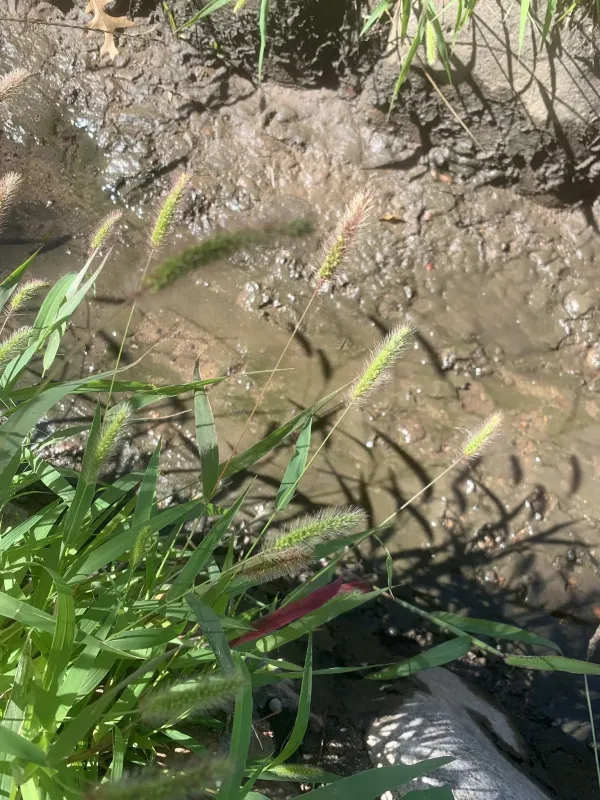
The plant typically grows up to 100 cm tall, often with stems branching at the base. The leaves are flat, narrow, and scabrous along the margins, with a dense ring of hairs at the ligule.
Its inflorescence is a dense, cylindrical, bristly panicle. The bristles are green or purplish, which gives the spike-like head a fuzzy appearance and a distinctive texture.
The root system is fibrous and aggressive, allowing the weed to thrive in various soil types and compete effectively for moisture and mineral resources during the growing season.
Seed production is prolific, with individual plants producing thousands of seeds. These seeds remain viable in the soil seed bank for several years, making persistent management necessary.
Where it grows
Green foxtail is found in a wide variety of habitats, including cropland, gardens, and roadsides. It prefers disturbed soils and thrives in fields where broadleaf crops are grown.
It is especially problematic in corn, soybean, and small grain crops, where its rapid germination and early growth allow it to establish a dominant position in the field canopy.
Harm it causes
The weed acts as a significant competitor for resources. It absorbs water and essential nutrients much faster than many crops, leading to significant yield reduction if left uncontrolled.
Beyond resource competition, it acts as an alternate host for various plant viruses and insect pests, increasing the disease pressure within the primary crop fields.
How to control
Cultural control practices include crop rotation and tillage, which help to disrupt the weed's life cycle. Mechanical cultivation in inter-row spaces is also highly effective during the early stages.
Chemical control involves the application of post-emergence herbicides. Choosing the right graminicide at the correct growth stage (typically 2-4 leaf stage) is crucial for success.
Taxonomy
- Latin name
- Setaria viridis
- Family
- Однолетние злаковые