
Galinsoga
Galinsoga parviflora
Description
How to tell it apart
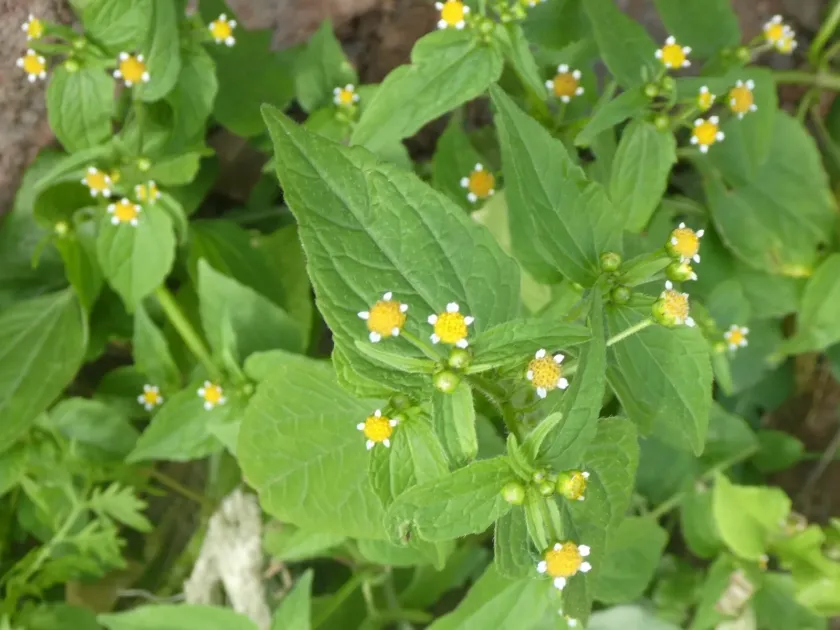
Galinsoga parviflora, commonly known as gallant soldier or quickweed, is an annual herb of the Asteraceae family. It typically grows to a height of 20 to 70 cm and is characterized by its heavily branched, hairy stems.
The leaves are opposite, ovate, and serrated along the margins. The foliage is typically light green and has a distinct texture due to the presence of fine hairs on both the stems and the leaves.
The inflorescence consists of small flower heads featuring white ray florets and yellow tubular disk florets in the center. Its seeds are small, dark-colored, and equipped with a pappus, allowing them to disperse easily.
One of the most notable features of this plant is its rapid life cycle. It can germinate, flower, and produce seeds within just a few weeks, which leads to multiple generations in a single growing season.
Its root system is fibrous and shallow, allowing it to regenerate quickly from stem nodes if they come into contact with moist soil, making it a persistent nuisance.
Where it grows
This weed is highly prevalent in cultivated areas, including vegetable crops, gardens, and row-crop farms. It thrives in nitrogen-rich, well-moistened soils and is common in temperate and subtropical climates.
It is often introduced into new areas through agricultural machinery, water runoff, or contaminated compost and organic fertilizers, quickly establishing dense patches in fertile fields.
Harm it causes
Galinsoga competes aggressively with crops for water, sunlight, and soil nutrients. Because of its rapid growth rate, it can quickly overshadow seedlings, significantly reducing potential yields.
In addition to resource competition, its presence interferes with harvest operations and can harbor pests, such as aphids, and plant pathogens, causing secondary indirect damage to the primary crop.
How to control
Mechanical control involves frequent cultivation or hoeing. Since the plant can re-root easily, it is essential to leave it exposed to sunlight and dry conditions after removal to ensure it dies.
Chemical control is effective using various selective herbicides. Applications should be timed when the weeds are in the seedling stage to prevent the formation of the persistent soil seed bank.
Integrated management, including crop rotation and the use of competitive cover crops, is highly recommended to suppress Galinsoga parviflora infestations over the long term.
Taxonomy
- Latin name
- Galinsoga parviflora
- Family
- Однолетние двудольные сорняки