
Pimelea trichostachya
Pimelea trichostachya
Description
How to tell it apart
Pimelea trichostachya, commonly known as the flaxweed or desert rice flower, is a member of the Thymelaeaceae family. It is an annual herb characterized by its distinct vegetative structure.
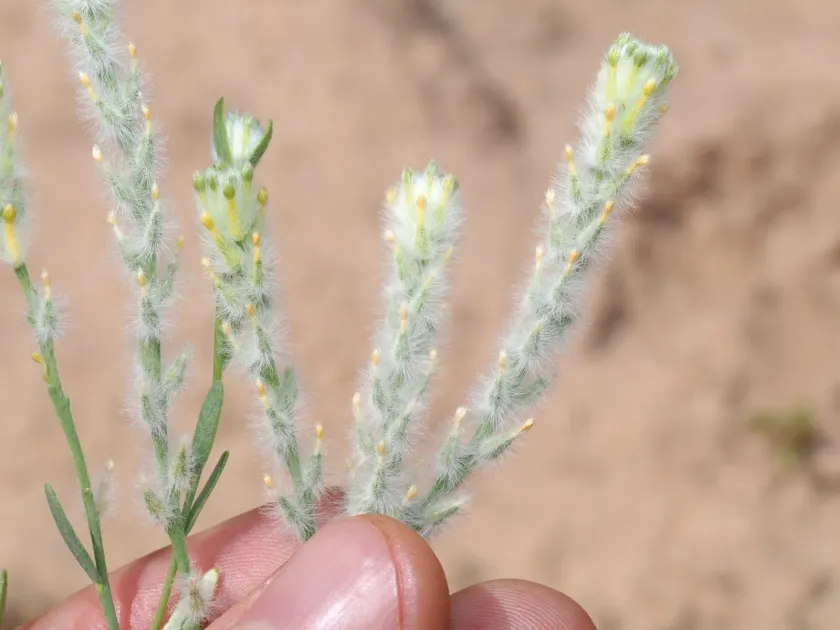
The plant grows as an erect, much-branched herb, typically reaching heights between 20 and 50 cm. Its leaves are opposite, narrow, and often exhibit a slightly pubescent (hairy) texture.
The inflorescences are its most notable feature, consisting of dense, hairy, spike-like clusters at the ends of the branches. The small flowers are typically yellowish-cream.
It possesses a strong taproot system, which allows the plant to efficiently extract moisture from the soil in arid environments, ensuring survival during drought conditions.
The plant produces small, wind-dispersed seeds that remain viable in the soil for several years, contributing to its persistence as an agricultural weed.
Where it grows
Pimelea trichostachya is native to the arid and semi-arid regions of Australia. It thrives in environments where rainfall is sparse and soil conditions are light.
It prefers sandy and loamy soils, frequently colonizing disturbed sites, such as overgrazed pastures, road verges, and fallow agricultural land.
In farming systems, this weed is known to invade cereal crop fields, where it competes aggressively with crops for water and essential nutrients during the growing season.
The weed often establishes itself rapidly on bare ground created by human activity or animal movement, making it a common problem in pastoral systems.
Seed dispersal is frequently facilitated by agricultural machinery, contaminated fodder, or water runoff, allowing the weed to spread into new areas of a farm.
Harm it causes
The primary concern regarding Pimelea trichostachya is its toxicity to livestock, particularly sheep and cattle. The plant contains diterpene esters that cause severe liver damage.
Ingestion of the plant can lead to staggers, weight loss, and photosensitization, where animals become sensitive to sunlight, leading to skin inflammation and potentially death.
Beyond its toxicity, the plant acts as a serious competitor in croplands. By occupying space and utilizing resources, it directly reduces the potential yield of crops.
High infestations create significant obstacles during harvesting, leading to increased wear on machinery and the presence of toxic contaminants in the grain supply.
Managing pastures infested with this plant requires significant financial investment, often necessitating the removal of livestock from infested paddocks for extended periods.
How to control
Mechanical control is effective if performed before the plant sets seeds. Deep cultivation or plowing helps bury the seeds and prevent them from germinating.
Regular mowing of fence lines and non-crop areas is critical to prevent the buildup of the soil seed bank and limit the plant's spread to surrounding fields.
Chemical control utilizes systemic herbicides applied during the rosette or early growth stages to ensure the most effective disruption of the plant's life cycle.
- Cleaning equipment before moving from infested to clean paddocks.
- Maintaining healthy pasture cover to discourage weed germination.
- Frequent field scouting to identify and spot-treat new infestations early.
An integrated strategy, focusing on both chemical intervention and land management, is essential to minimize the risk posed by this toxic weed to agricultural production.
Taxonomy
- Latin name
- Pimelea trichostachya
- Family
- Волчниковые
- EPPO code
- PMLTR