
Pimelea prostrata
Pimelea prostrata
Description
How to tell it apart
Pimelea prostrata, commonly known as New Zealand daphne, belongs to the Thymelaeaceae family and is a low-growing, mat-forming shrub.
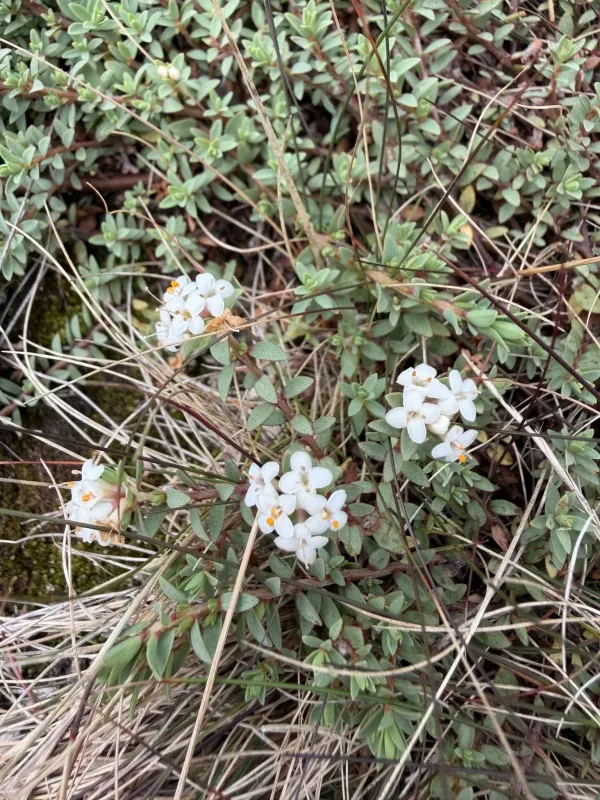
The plant is characterized by its prostrate stems that spread horizontally across the ground, creating dense, carpet-like layers.
Its leaves are small, opposite, and typically exhibit a glaucous or grey-green coloration, which helps in distinguishing it from other meadow weeds.
The flowers are clustered in small, head-like inflorescences that are white to cream-colored, providing a clear visual marker during the flowering season.
With a robust root system, the plant demonstrates high adaptability and vigor, allowing it to anchor securely in various soil types.
Where it grows
The native habitat of Pimelea prostrata includes open grasslands, sand dunes, and mountainous areas, primarily within New Zealand.
In agricultural settings, it is often found invading pastures, range lands, and areas where the vegetation cover has been disturbed.
It thrives in well-drained, sun-exposed locations, making it a persistent colonizer in open fields or neglected agricultural zones.
The weed frequently spreads along field margins, road verges, and irrigation channels, gradually infiltrating deeper into productive land.
It is capable of surviving drought conditions, which gives it a competitive edge in regions with inconsistent precipitation patterns.
Harm it causes
The primary damage caused by Pimelea prostrata involves outcompeting desirable crops or forage species for essential nutrients, water, and sunlight.
By forming dense mats, the plant inhibits the emergence and growth of younger crop seedlings, leading to reduced overall yield.
In grazing environments, it reduces the nutritional quality of the forage, as it replaces beneficial grasses that are vital for livestock health.
The plant's presence complicates field management activities, such as mowing or mechanical weeding, due to its low-profile and resilient root structure.
It also contributes to soil nutrient depletion, requiring higher fertilizer inputs to maintain optimal growing conditions for the desired crop.
How to control
Mechanical control measures include deep plowing or harrowing, which disrupts the creeping stems and damages the established root systems.
Effective management also involves regular mowing or grazing pressure, which prevents the plant from maturing and producing seeds.
Chemical control with systemic herbicides, particularly those containing glyphosate, is highly effective when applied during the peak vegetative stage.
Farmers are advised to monitor field borders and identify early patches of the weed to prevent its expansion into larger crop areas.
- Rotate crops to alter the competitive environment for the weed.
- Use weed-free seeds to prevent introduction into new areas.
- Implement integrated pest management (IPM) to maintain long-term field health.
Taxonomy
- Latin name
- Pimelea prostrata
- Family
- Волчниковые
- EPPO code
- PMLPR