
Paullinia pinnata
Paullinia pinnata
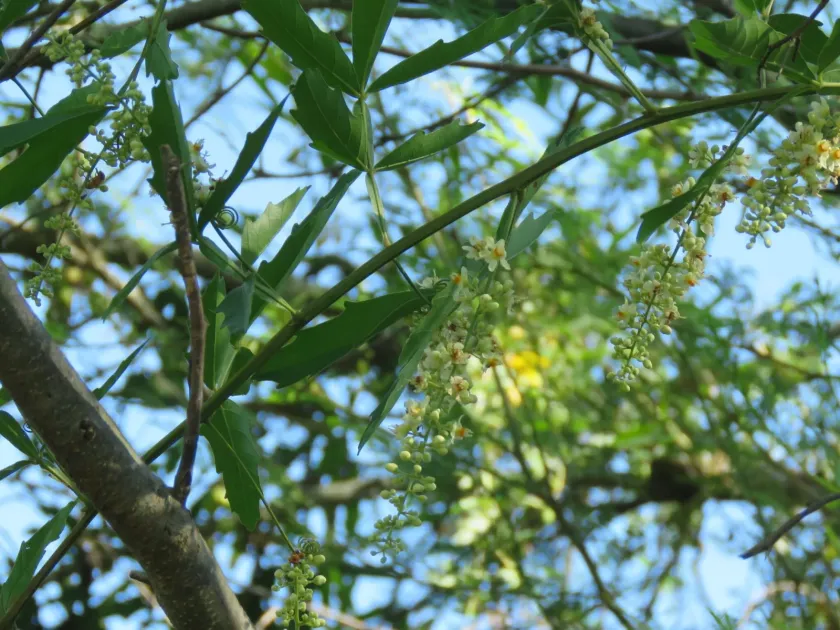
Description
How to tell it apart
Paullinia pinnata is a woody, perennial climbing vine belonging to the Sapindaceae family. It is easily recognized by its compound, pinnate leaves, which are typically composed of five leaflets with serrated margins.
The stems of this plant are characteristically grooved and possess the ability to reach significant lengths, using tendrils to climb and secure themselves onto host plants, including valuable crops.
Flowers are white or cream-colored, arranged in dense racemes. The reproductive strategy of this plant relies heavily on seed dispersal, facilitated by its unique fruit structure that often attracts wildlife and birds.
The fruit is a three-valved capsule that turns bright red when mature, eventually splitting open to release seeds that are often equipped with fleshy appendages, ensuring efficient spreading.
As an evergreen species in tropical habitats, Paullinia pinnata maintains year-round metabolic activity, which contributes significantly to its status as an aggressive and persistent agricultural weed.
Where it grows
Paullinia pinnata is indigenous to tropical regions, including parts of Africa and the Americas. It thrives in well-lit areas such as forest edges, riverbanks, and disturbed, anthropogenic environments.
In agricultural settings, this weed is commonly found invading cocoa, coffee, and fruit plantations. It often establishes itself along the perimeter of fields, slowly encroaching into the cultivated center.
The plant exhibits remarkable ecological plasticity, allowing it to colonize diverse soil types provided that there is sufficient moisture. It is particularly invasive in low-intensity cultivation systems.
Field margins and neglected irrigation channels serve as primary corridors for the weed's expansion, as these areas provide both support for climbing and unhindered access to resources.
Human activity, specifically the clearing of land for agriculture without follow-up maintenance, often creates the perfect conditions for the rapid germination and growth of Paullinia pinnata seeds.
Harm it causes
The primary damage caused by Paullinia pinnata is mechanical suppression. The vine entwines around crop plants, which limits their structural integrity and hinders the natural growth and fruit production.
By creating a dense, climbing canopy over the host crop, the vine restricts light penetration, which is vital for the photosynthetic activity of the underlying agricultural plants.
Competition for soil nutrients and water is severe, especially during the dry season. The plant's deep and spreading root system allows it to outcompete crops for essential underground resources.
Paullinia pinnata significantly hinders mechanized agricultural operations. The tough, tangled vines frequently clog and damage machinery during tillage or harvesting processes.
Furthermore, the weed can act as an alternative host for various pests and diseases, increasing the overall phytosanitary risk to the main crop and necessitating additional chemical interventions.
How to control
Manual control involves regular uprooting of the weed, particularly during its early growth stages. Ensuring the removal of the root system is critical to prevent vegetative regrowth.
For established vines, cutting the stem near the base and applying herbicides directly to the stump is a standard and effective practice to prevent the plant from regenerating.
Chemical control programs often utilize systemic herbicides. These are best applied during the active growth period to ensure translocation throughout the vine's extensive root system.
Integrated weed management includes preventing the plant from spreading along the fence lines and irrigation ditches through regular monitoring and clearing of buffer zones.
- Regular monitoring and early detection.
- Mechanical removal of root systems.
- Targeted systemic herbicide application.
- Strategic clearing of field perimeters.
Taxonomy
- Latin name
- Paullinia pinnata
- Family
- Сапиндовые
- EPPO code
- PAXPI