
Chickweed wintergreen
Lysimachia europaea
Description
How to tell it apart
Chickweed wintergreen, botanically known as Lysimachia europaea (formerly Trientalis europaea), is a perennial herb of the Primulaceae family. It features a slender stem ranging from 5 to 20 cm in height, capped by a whorl of leaves.
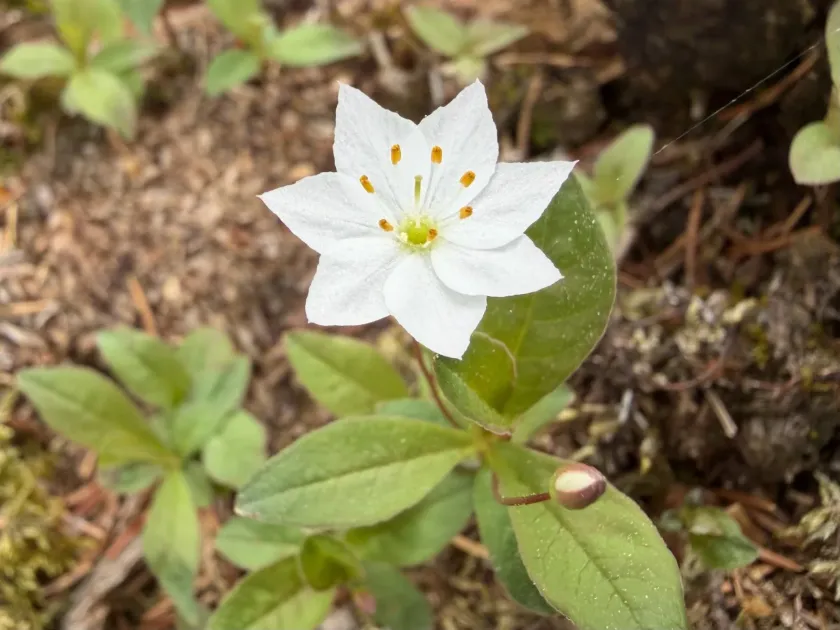
The plant is easily identified by its unique flower structure: it typically has seven petals, seven stamens, and seven sepals, which is a rare feature in the plant kingdom. Flowers are solitary, white, and held on delicate stalks emerging from the leaf whorl.
The subterranean structure consists of creeping rhizomes, which allow the plant to spread vegetatively. These rhizomes form dense mats in favorable environments, making it a persistent perennial weed in specific conditions.
Biologically, the plant favors cool, moist, and acidic soil environments. While not a primary agricultural pest, it can colonize field edges and neglected areas that share characteristics with forest floors.
The plant demonstrates high adaptability to shade and dampness. Its presence is often limited to specific, less-disturbed soil conditions, though it can become aggressive if allowed to establish undisturbed colonies.
Where it grows
The species primarily inhabits coniferous and mixed forests. In agricultural settings, it is found in fields adjacent to wooded areas or on reclaimed peatlands where moisture levels remain high.
It prefers acidic, humus-rich, and damp soil. It is rarely found in intensive, well-drained, and neutral-pH croplands, as such conditions are detrimental to its survival and growth.
Field colonization occurs mainly via rhizome fragments spread by agricultural machinery. Seed production contributes less to its dispersal compared to the efficient vegetative spread through root systems.
It frequently thrives in low-lying, poorly drained patches of fields. These wet spots provide the microclimate necessary for the plant to persist alongside more traditional agricultural weeds.
The weed typically avoids areas exposed to direct sunlight or those with frequent drought, meaning its impact is geographically localized within specific field boundaries.
Harm it causes
The primary harm caused by chickweed wintergreen is competition for water and nutrients. Its ability to create dense vegetative mats suppresses the development of nearby crop seedlings.
Its presence is an indicator of soil acidity, which is often suboptimal for standard cereal and legume crops. This acidity can negatively influence overall crop yield and health.
By consuming nutrients through its rhizome network, the weed reduces the availability of essential elements in the topsoil, forcing crops to compete for survival from the germination stage.
The plant interferes with mechanical field operations, especially in areas where it forms patches. Persistent presence might lead to uneven crop growth and increased demand for maintenance operations.
While not categorized as a major invasive species, it acts as a competitor in newly cultivated fields or pastures, where it can rapidly overtake space if standard tillage practices are not followed.
How to control
The most effective agronomic control measure is deep autumn plowing. Turning the soil successfully buries and exhausts the rhizome system, limiting the plant's ability to regenerate.
Soil amendment through liming is highly recommended. By correcting soil acidity to reach a neutral pH, farmers can create an environment that is naturally hostile to chickweed wintergreen.
Crop rotation incorporating intensive mechanical tillage, such as harrowing and cultivation, disrupts the rhizome development and prevents the weed from forming established colonies.
For localized infestations, herbicide application using systemic products (such as glyphosate-based formulas) during the post-harvest period can be highly effective at reaching the underground rhizomes.
Maintaining clear field edges and managing adjacent woodland borders prevents the encroachment of rhizome fragments into the active cultivation zones of the field.
Taxonomy
- Latin name
- Lysimachia europaea
- Family
- Первоцветные
- EPPO code
- TNTEU