
Tropical pokeweed
Phytolacca icosandra
Description
How to tell it apart
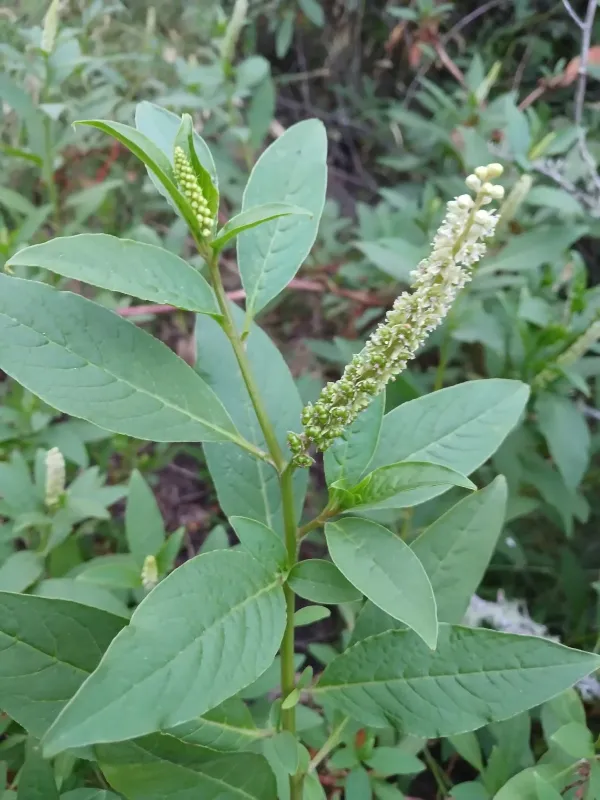
Tropical pokeweed (Phytolacca icosandra) belongs to the Phytolaccaceae family. It is a perennial herbaceous plant known for its robust root system and strong stems that can reach significant heights under favorable conditions.
The leaves are alternate, simple, and typically lanceolate or elliptical in shape. During the flowering period, the plant produces racemes that eventually develop into clusters of dark purple or black berries.
The name icosandra derives from the presence of 20 stamens in the flowers, which is a key diagnostic feature distinguishing it from other related species within the genus.
This weed reproduces both by seeds, which have long-term viability in the soil, and vegetatively from its perennial rootstocks, making it difficult to eradicate completely through shallow tillage.
The entire plant possesses a distinctive odor and is toxic, containing chemical compounds that provide a natural defense mechanism against herbivores.
Where it grows
The native distribution of Phytolacca icosandra includes Mexico, Central America, the Caribbean, and the northwestern parts of South America. It has also been introduced to the southwestern United States.
The plant thrives in moist, well-drained soils and is commonly found on abandoned agricultural lands, along roadsides, and in proximity to irrigation ditches or disturbed areas.
In cropping systems, it is known to infest vegetable fields, orchards, and various broad-leaved crop plantations where it competes aggressively for space, sunlight, and soil nutrients.
Seed dispersal is largely facilitated by birds that feed on the ripe berries, enabling the weed to spread rapidly across landscapes and infest fields far from the original source.
Its ability to adapt to varying light intensities allows it to persist under the canopy of perennial crops, making it a nuisance in fruit orchards and nursery plantations.
Harm it causes
The primary agricultural harm caused by tropical pokeweed is intense resource competition. Its rapid growth and large leaf area lead to the shading of cultural crops, significantly reducing their yield.
It poses a significant risk to livestock. The plant is toxic; accidental ingestion of its foliage or berries by cattle or sheep can lead to poisoning, resulting in potential veterinary costs and livestock loss.
Tropical pokeweed serves as a host for various agricultural pests and plant diseases, acting as a reservoir that facilitates the spread of pathogens to surrounding healthy crops.
Mechanical harvesting is often hampered by the presence of this weed, as the sturdy stalks can clog or damage machinery, leading to increased downtime and maintenance requirements.
Contamination of the harvested product with pokeweed seeds lowers the market quality of the crop, necessitating expensive cleaning processes post-harvest to ensure seed purity.
How to control
Integrated weed management is essential for successful control. Mechanical methods, including deep plowing and regular mowing, can effectively weaken the rootstock if performed consistently before the flowering stage.
Crop rotation strategies that utilize competitive cover crops are highly effective at suppressing pokeweed germination and preventing its establishment in the field.
Chemical control focuses on the use of systemic herbicides. Glyphosate-based products are typically recommended as they are translocated to the perennial roots, providing more comprehensive kill rates.
Applications should be timed carefully; targeting the weed during its active vegetative growth phase ensures maximum herbicide uptake and metabolic distribution throughout the root system.
- Conduct regular field scouting to identify and spot-treat new outbreaks.
- Mechanical removal before berries mature to prevent soil seed bank replenishment.
- Application of selective herbicides in compliance with local regulations.
Taxonomy
- Latin name
- Phytolacca icosandra
- Family
- Лаконос
- EPPO code
- PHTIC