
Indian poke
Phytolacca acinosa
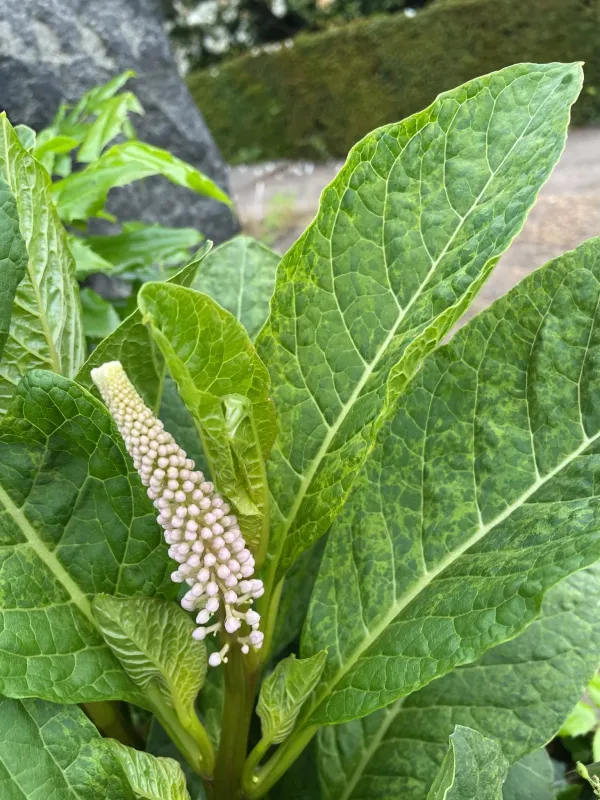
Description
How to tell it apart
Indian poke, scientifically known as Phytolacca acinosa, is a perennial herbaceous plant recognized by its fleshy taproot and erect, branching stems. In optimal conditions, it can reach significant heights, making it highly competitive for sunlight in agricultural fields.
The leaves are broad, elliptical, and alternate along the stem. The inflorescences are long, grape-like racemes that produce dark, juicy berries upon ripening, which is a key diagnostic feature for field identification.
The root system is thick, fleshy, and deep-growing, which allows the plant to survive droughts and mechanical disturbance. This extensive underground network makes the weed particularly resilient and difficult to eradicate manually.
Young plants develop quickly, emerging in early spring. The stem and leaf veins often exhibit a reddish or purple hue, distinguishing it from other broadleaf weeds in the same field environment.
Botanically, it belongs to the Phytolaccaceae family. It is a highly aggressive species in warm climates, known for its rapid growth rate and ability to outpace standard crop development during the early growing season.
Where it grows
Indian poke thrives in fertile, moisture-rich soils. It is frequently found in cultivated areas, orchards, vineyards, and alongside irrigation ditches, where it benefits from regular water availability.
It prefers areas with high organic matter, often invading edges of fields and waste ground. Due to its shade tolerance, it easily establishes itself under the canopy of perennial crops or in densely planted field rows.
The seeds are dispersed by birds attracted to the fleshy berries, leading to infestations in remote areas of the farm far from the original site. This biological trait makes it difficult to contain without strict population monitoring.
Phytolacca acinosa is highly adaptive to various soil types, ranging from loamy to slightly compacted soils. It persists in agricultural ecosystems where soil moisture levels are maintained for crop growth.
The plant often forms dense colonies, suppressing the growth of local native plants and commercial crops. Once established, it can remain in an area for years due to the longevity of its seed bank in the soil.
Harm it causes
The primary agricultural impact of Indian poke is its role as a nutrient and water competitor. Its deep roots allow it to extract resources that would otherwise support crop yields, leading to stunted growth of neighboring plants.
Allelopathic properties of the root system can actively inhibit the germination and growth of other plant species. This chemical interference results in sparse crop stands and reduced overall field productivity.
All parts of the plant are considered toxic to livestock due to the presence of saponins. If contaminated material is harvested into forage or silage, it can cause severe poisoning of farm animals.
Harvesting difficulties arise when Indian poke is present in field crops, as the dark juice from the crushed berries can stain grain, fruit, or vegetables, significantly reducing their commercial quality and market value.
The weed acts as a physical obstacle in the field, shading out crops and promoting microclimates conducive to fungal diseases. This necessitates higher input levels to maintain crop health and yield standards.
How to control
Mechanical control focuses on the removal of the entire root system. Surface cultivation is largely ineffective, as broken root fragments often sprout new plants, so deep manual digging is required for small infestations.
Chemical control involving systemic herbicides is the most effective approach for large-scale management. Applications should be timed during the plant's peak vegetative growth stage to ensure the herbicide reaches the roots.
Preventative measures include regular field monitoring and sanitation of farming equipment to prevent the introduction of seeds. Stopping the plant from flowering and fruiting is essential to prevent future seed bank expansion.
Implementing a crop rotation system that includes vigorous competition from smother crops can help suppress Indian poke. Frequent deep tillage, while not a standalone solution, disrupts root stability and weakens the plants.
Integrated pest management (IPM) strategies, combining chemical spot-treatment with physical removal, are recommended. Consistency is key, as the persistence of this species requires ongoing vigilance over several growing cycles.
Taxonomy
- Latin name
- Phytolacca acinosa
- Family
- Лаконос
- EPPO code
- PHTES