
Striga hermonthica
Striga hermonthica
Description
How to tell it apart
Striga hermonthica, commonly known as witchweed, is a member of the Orobanchaceae family. It is an obligate root parasite that contains very little chlorophyll, relying entirely on its host for survival.
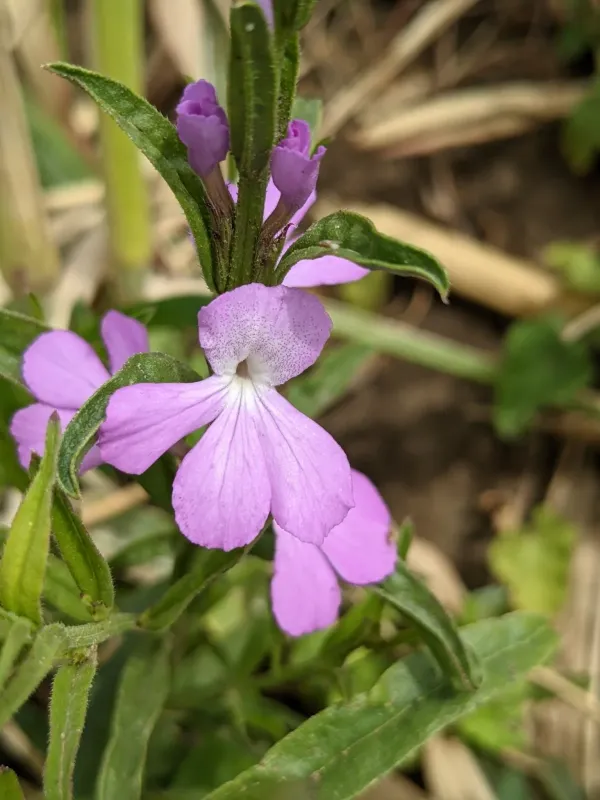
The plant features an erect stem, typically 15 to 60 cm tall, adorned with bright pink, lilac, or white flowers. Its leaves are narrow, rough, and covered with fine hairs.
The root system is modified into specialized organs called haustoria. These structures penetrate the host plant's roots to extract essential water, minerals, and carbohydrates.
The life cycle is triggered by chemical signals secreted from host roots. Seeds can remain dormant in the soil for 10–20 years until a host root is detected nearby.
If a germinated seedling fails to attach to a host root within a few days, it will die, as its energy reserves are extremely limited and insufficient for sustained growth.
Where it grows
Striga hermonthica is widely distributed across sub-Saharan Africa. It thrives primarily in arid and semi-arid environments where high temperatures and low rainfall are prevalent.
The parasite favors well-drained, sandy, or light-textured soils. It is particularly aggressive in areas with low soil fertility and poor agricultural management practices.
Its primary hosts include essential cereal crops like sorghum, pearl millet, maize, rice, and sugarcane. Some wild grasses can also serve as alternative hosts for the parasite.
Dispersal is driven by human activity, including the movement of contaminated farm tools, animal fodder, and movement of infested soil or seed lots.
Warm soil temperatures are essential for the germination of Striga seeds, allowing the parasite to synchronize its emergence with the start of the host's growing season.
Harm it causes
Striga causes significant damage to the host plant long before the weed emerges above the soil surface. It begins withdrawing resources from the host as soon as the haustorial connection is established.
Host crops suffer from severe nutrient and water deprivation, leading to stunted growth, leaf chlorosis, and significantly reduced photosynthetic capacity, which leads to total crop failure.
Yield losses can range from 20% to 100% depending on the level of infestation. This parasitic weed is a primary cause of food insecurity for millions of smallholder farmers.
Beyond direct resource theft, Striga alters the host's hormonal balance, resulting in smaller root systems and increased susceptibility to drought, pests, and various plant diseases.
The accumulation of millions of seeds in the soil makes infested fields unproductive for long periods, forcing farmers to abandon their land and migrate to new areas.
How to control
Integrated management is essential for controlling Striga. One successful method is "trap cropping" using legumes like cowpea, which trigger suicidal germination of Striga seeds without allowing the parasite to attach.
Crop rotation with non-host species is highly recommended to deplete the seed bank in the soil over several seasons. This disrupts the parasite's ability to locate a suitable host.
Chemical control remains difficult because the weed is physically attached to the host. Herbicides are generally not feasible unless specific resistant crop varieties are used in combination with them.
Breeding for Striga resistance in maize and sorghum is a major agricultural strategy. Developing varieties that produce fewer germination stimulants is key to reducing infestation levels.
- Hand-weeding before the weed flowers to prevent seed production.
- Using mineral fertilizers to boost host vigor and reduce parasite success.
- Practicing strict farm hygiene to prevent the movement of contaminated materials.
Taxonomy
- Latin name
- Striga hermonthica
- Family
- Заразиха
- EPPO code
- STRHE