
Striga forbesii
Striga forbesii
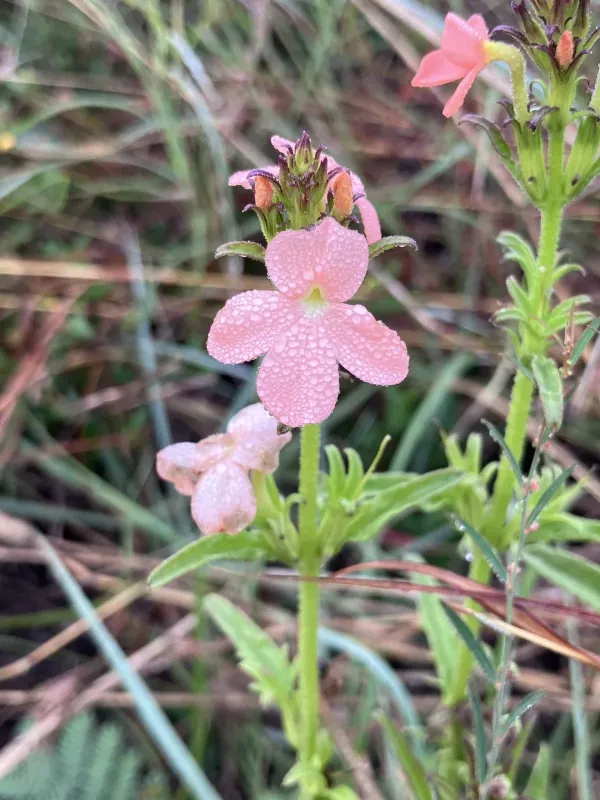
Description
How to tell it apart
Striga forbesii is a species of parasitic plant belonging to the Orobanchaceae family. Known as a root hemiparasite, it has evolved a specialized lifestyle where it extracts essential nutrients, water, and minerals directly from the root systems of host plants.
The plant typically grows between 20 and 50 cm in height, characterized by a rough, erect stem and narrow, opposite leaves. During the flowering stage, it produces vivid red or pink flowers, which serve as a primary visual indicator for identification in infested agricultural fields.
The most crucial aspect of its morphology is the formation of haustoria. These specialized root-like structures penetrate the vascular tissue of the host plant, creating a direct bridge for the transfer of solutes from the host to the parasite.
The seeds of Striga forbesii are minuscule, dust-like, and can remain dormant in the soil for years. They are triggered to germinate only upon sensing specific chemical exudates produced by the roots of suitable host plants, such as cereals.
Early identification is notoriously difficult due to the subterranean nature of the parasite's development. By the time the leafy stems emerge from the soil surface to bloom, the physiological damage to the host crop is often already advanced.
Where it grows
This parasitic weed is primarily found in tropical and subtropical regions of Africa. It thrives in soils that are often nutrient-poor, where host crops are less competitive, and where environmental conditions favor the rapid germination of parasitic seeds.
The primary hosts for Striga forbesii are cereal crops, including maize, sorghum, and pearl millet. These grains are staple foods for millions of people, making the infestation of this weed a serious threat to regional food security.
It prefers warm environments and is frequently observed in fields characterized by intensive continuous cropping. The lack of proper fallow periods and soil fertility management creates an ideal environment for the parasite to establish and multiply.
Striga forbesii also colonizes uncultivated lands and wild grasses, which act as reservoirs for the weed. This enables it to survive even in the absence of commercial farming activities, complicating eradication efforts.
The weed is highly adapted to various soil textures, provided there is enough moisture at the start of the rainy season to trigger germination and subsequent attachment to the host roots.
Harm it causes
The damage caused by Striga forbesii occurs well before the weed is visible above the soil. This invisible phase of parasitism involves a significant diversion of energy, water, and essential nutrients away from the crop, leading to stunted growth and wilting.
Infested cereal plants often display signs of severe malnutrition, including yellowing leaves, significant reduction in biomass, and poor grain development. In extreme cases, the host plant may die before reaching maturity.
Crop yield losses associated with severe infestations can range from 60% to 90%. In subsistence farming contexts, these losses can lead to complete crop failure, resulting in significant economic hardship and food shortages for local populations.
The parasite also injects phytotoxic substances into the host's vascular system. This process disrupts the normal physiological functions of the host plant, rendering it more susceptible to secondary attacks by pests and soil-borne diseases.
The rapid accumulation of thousands of seeds per plant into the soil bank ensures that once a field is infested, the land remains problematic for many subsequent growing seasons, necessitating long-term management strategies.
How to control
Management of Striga forbesii requires an integrated approach. The use of trap crops—plants that stimulate the germination of Striga seeds but do not support its parasitic growth, such as legumes or cotton—is highly effective in reducing the seed bank.
Crop rotation is a fundamental tool. By avoiding the cultivation of susceptible cereal hosts for multiple years, farmers can starve the parasite. Incorporating non-host crops like cowpeas or groundnuts into the rotation schedule is recommended.
Mechanical control involves the prompt removal of Striga plants before they can produce seeds. While labor-intensive, preventing the influx of new seeds into the soil is critical for breaking the infestation cycle.
Research into chemical control is ongoing, with efforts focused on herbicides that can be applied to either the soil or the crop to inhibit the development of the parasite without damaging the main food crop.
- Implementation of diverse crop rotation schemes.
- Use of trap crops (e.g., legumes) to induce "suicidal germination."
- Application of soil fertility treatments to boost crop vigor.
- Hand-weeding before the onset of flowering and seed production.
Taxonomy
- Latin name
- Striga forbesii
- Family
- Заразиховые
- EPPO code
- STRFO