
Witchweed
Striga asiatica
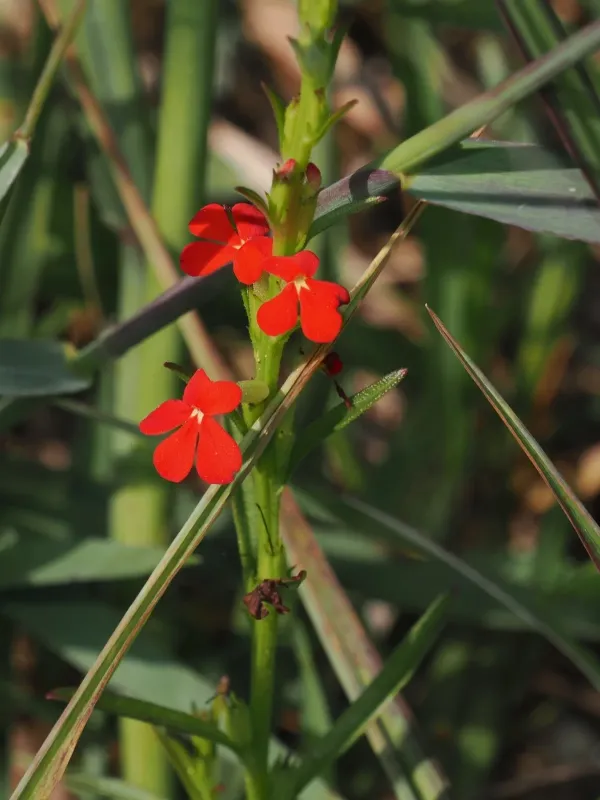
Description
How to tell it apart
Striga asiatica, commonly known as witchweed, is a parasitic plant within the Orobanchaceae family that targets the roots of grasses and cereals.
The plant is an annual herb, usually reaching heights of 10 to 30 centimeters, with a rough, hairy stem that can be green or purplish.
Its leaves are narrow, linear, and arranged oppositely near the base, becoming alternate as they progress up the stem towards the inflorescence.
The flowers are the most distinct feature, blooming in vibrant shades of red, pink, white, or yellow, making the infestation visible during the season.
The root system is highly specialized, forming haustoria that penetrate the host plant's roots to tap into their vascular system for essential nutrients.
Where it grows
Witchweed is primarily found in the tropical and subtropical regions of Asia, Africa, and specific localized areas in the United States.
It favors sunny, warm environments with light, sandy soils, which are ideal for its germination and successful attachment to host roots.
The weed aggressively attacks major cereal crops, including maize, sorghum, rice, pearl millet, and sugarcane, often causing devastating losses.
Seeds are extremely small and numerous, allowing them to be easily transported by wind, running water, farm equipment, and contaminated grain supplies.
Due to its invasive nature, Striga asiatica is strictly regulated under quarantine laws in many nations to prevent its further geographical spread.
Harm it causes
The damage caused by Striga asiatica is severe because it steals water, minerals, and photo-assimilates directly from the host plant's root system.
Host plants typically exhibit signs of drought stress, stunting, chlorosis, and wilting, as their internal resources are hijacked by the parasite.
The parasitic impact begins underground long before the weed emerges, meaning significant damage occurs before the farmer notices the infestation.
Crop yields can plummet by 30% to 100% depending on the density of the Striga seeds in the soil and the vulnerability of the specific host crop.
Furthermore, the toxic metabolic byproducts released by the weed into the host further compromise the overall vitality and harvest quality of the crop.
How to control
Controlling witchweed requires an integrated approach, starting with the use of host plant resistance or tolerance to suppress the parasite's development.
Catch-cropping and trap-cropping techniques are essential; these involve planting non-host species that trigger the germination of Striga seeds without supporting them.
Standard agronomic practices such as crop rotation with legumes or cotton, coupled with timely hand-weeding, are critical to prevent seed bank replenishment.
Chemical control measures are challenging and usually involve the application of selective herbicides during the early stages of infestation.
- Implementation of strict quarantine measures for seeds and soil.
- Frequent scouting to identify and pull weeds before they flower.
- Deep tillage practices to bury seeds and reduce their viability in the upper soil layers.
Taxonomy
- Latin name
- Striga asiatica
- Family
- Заразиха
- EPPO code
- STRLU