
Striga
Striga
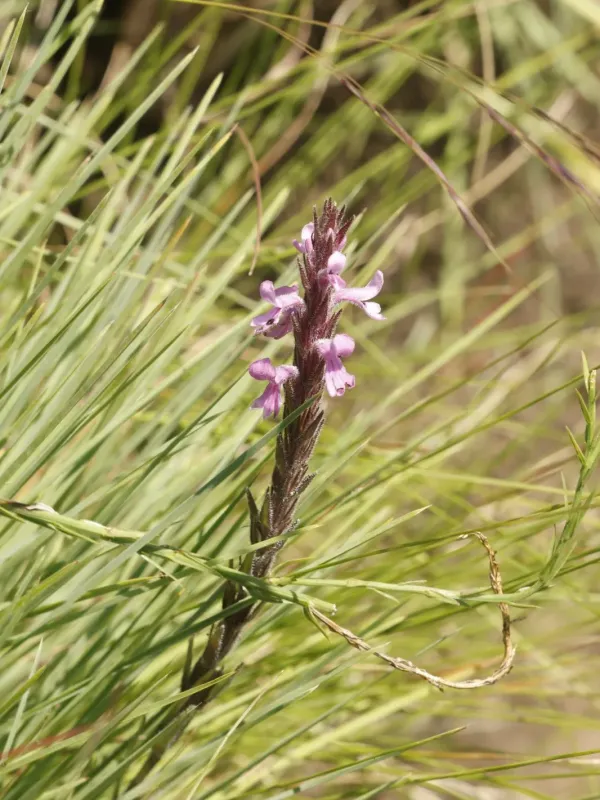
Description
How to tell it apart
Striga, commonly known as witchweed, belongs to the Orobanchaceae family. It is a genus of parasitic plants that contain chlorophyll, allowing them to perform photosynthesis while still relying on a host for water and nutrients.
The plant typically grows up to 40 cm tall and is characterized by slender, green stems and narrow leaves. Its most distinctive feature is its vibrant, brightly colored flowers, which can be red, pink, or yellow.
The core of its existence is the haustorium, a root-like organ that anchors the weed to the host plant. Through this structure, Striga taps into the xylem of crops to extract vital resources.
Seeds of Striga are microscopic and can persist in soil for decades. They remain dormant until they detect specific chemical signals emitted by the roots of potential host plants.
This sophisticated biological mechanism ensures that the parasite only germinates when a food source is within reach, making it an incredibly successful and difficult-to-eradicate pest.
Where it grows
Striga is primarily found in tropical and subtropical regions across Africa, Asia, and parts of Australia. It thrives in environments where host cereals are grown under conditions of low soil fertility.
The weed is particularly prevalent in areas practicing continuous monoculture, as this provides a constant supply of hosts. It is well-adapted to hot, dry climates where cereal crops are stressed.
Common hosts include major food staples such as maize, sorghum, millet, and sugarcane. Its range is currently expanding due to changes in agricultural patterns and environmental shifts.
The dispersal of the weed is driven by wind, water, and human activity. Contaminated agricultural tools and machinery are common vectors that move seeds from infested fields to clean areas.
While historically localized, the threat of Striga is global. Its ability to tolerate various environmental stresses allows it to establish itself in diverse agricultural landscapes.
Harm it causes
The damage caused by Striga is profound, often described as a major threat to global food security. It causes significant "hidden" damage before the weed even emerges from the ground.
By siphoning nutrients and water, Striga induces severe stunting and chlorosis in host crops. Plants infested with witchweed often fail to develop healthy ears or panicles, leading to drastic yield reductions.
Beyond resource depletion, the parasite releases toxic compounds into the host. This interferes with the plant’s metabolism, often leading to total crop failure in heavily infested fields.
Farmers often suffer total economic loss, forcing them to abandon productive land. The cumulative effect of Striga infestations can destabilize local economies that rely heavily on subsistence farming.
Quality of the remaining grain is also significantly reduced. Infested fields often produce shriveled, low-protein grains that are unsuitable for sale or long-term storage.
How to control
Managing Striga requires an integrated approach because chemical control alone is rarely effective. The focus must be on depleting the soil seed bank and preventing new seeding.
The use of trap crops, such as cowpea or soybean, is highly effective. These plants stimulate Striga germination but cannot support the parasite, causing the weed to die after emergence.
Agronomic practices like rotating crops, increasing soil nitrogen levels, and using resistant crop varieties are essential. A well-nourished crop is less susceptible to initial infestation.
Manual weeding is a crucial intervention, provided it is performed before the Striga plants begin to flower. One mature plant can produce thousands of seeds, re-infesting the soil rapidly.
Research into biological control agents and advanced herbicides that target Striga’s germination signals remains the frontline of modern management strategies against this persistent weed.
Taxonomy
- Latin name
- Striga
- Family
- Заразиха
- EPPO code
- STRSS