
Rhamphicarpa fistulosa
Rhamphicarpa fistulosa
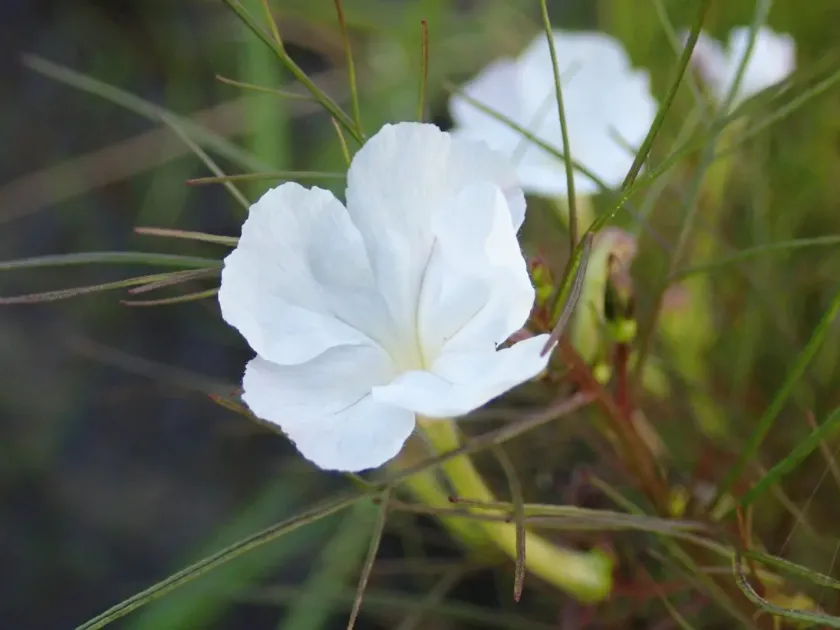
Description
How to tell it apart
Rhamphicarpa fistulosa is a hemiparasitic plant belonging to the Orobanchaceae family. It is an annual weed that poses a significant threat to various cereal crops, primarily rice.
The plant is characterized by slender stems and narrow, linear leaves. It produces white or pale pink flowers, which help in identifying the weed during its flowering season.
The most distinctive biological feature of Rhamphicarpa fistulosa is its ability to produce haustoria. These specialized root structures penetrate the host plant's roots to extract nutrients and water.
The weed grows from very fine seeds that are capable of remaining dormant in the soil for several years, waiting for the presence of a suitable host plant to trigger germination.
Because the initial development happens underground through root connections, the presence of the weed often remains undetected until the host plant begins to show signs of severe stress.
Where it grows
Rhamphicarpa fistulosa is primarily found in sub-Saharan Africa. It has become a notorious pest in lowland rice production systems, thriving in wet and waterlogged soils.
The plant prefers areas with high soil moisture, which makes rice paddies an ideal environment for its propagation and spread during the irrigation season.
Apart from rice, it can also infect wild grass species found in natural grasslands and pastures, ensuring its survival even when fields are left fallow or converted for other uses.
The weed is highly adaptive to various soil types, provided that the moisture levels remain sufficient to support the initial development of the parasitic haustoria.
The dispersal of seeds is often facilitated by water flow in irrigation channels, making it extremely difficult to contain the infestation once it enters a water management system.
Harm it causes
The primary harm caused by Rhamphicarpa fistulosa is the significant reduction in rice yields. By stealing water and nutrients, the parasite directly weakens the host plant's vigor.
Infected rice crops typically show symptoms of severe chlorosis, stunted growth, and a lack of proper tillering, which limits the overall capacity for grain production.
In severe infestations, the yield loss can be total, as the energy required for grain filling is diverted to the parasite instead of the host plant's reproductive tissues.
Furthermore, the parasite makes the rice plants more susceptible to secondary infections and environmental stresses, as their internal defense mechanisms are already depleted.
The economic impact on subsistence and commercial farming is substantial, as the weed can cause long-term soil contamination that hinders the productivity of affected fields for several seasons.
How to control
Effective control measures include crop rotation with non-host species, which starves the weed of the nutrients it needs to complete its lifecycle and reduces the soil seed bank.
Good agricultural practices such as using weed-free seeds and cleaning farm machinery before moving it between plots are essential to prevent the spread of the parasite.
Water management techniques, such as adjusting the timing of flooding and drainage in rice paddies, can sometimes be used to disrupt the germination of the weed seeds.
Chemical control remains challenging because the parasite is attached to the crop itself. Research is ongoing into the use of selective herbicides that can target the parasite without killing the rice.
Breeding for resistance is considered the most sustainable long-term solution. Researchers are focused on developing rice varieties that are naturally resistant to the attachment of the weed's haustoria.
Taxonomy
- Latin name
- Rhamphicarpa fistulosa
- Family
- Заразиха
- EPPO code
- RPCLO