
Parentucellia viscosa
Parentucellia viscosa
Description
How to tell it apart
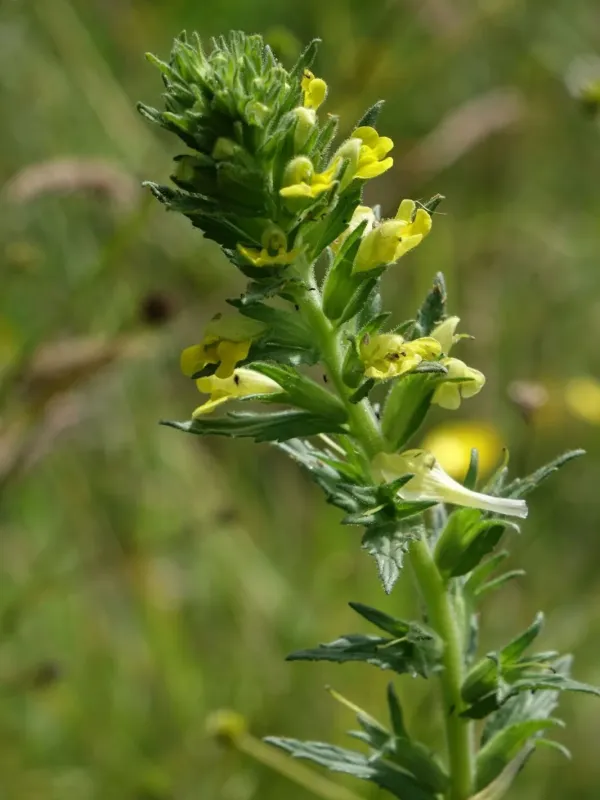
Parentucellia viscosa, commonly known as yellow glandweed, is an annual hemiparasitic plant belonging to the Orobanchaceae family. It typically reaches a height of 10 to 50 cm and possesses a simple or branched stem.
The entire plant is covered in glandular hairs, which secrete a sticky substance, giving it a greasy or viscous texture. This characteristic is a primary diagnostic feature for identifying the species in the field.
The leaves are opposite, sessile, and lanceolate or ovate in shape, with serrated margins. Both surfaces of the leaves are also pubescent, reflecting the general hairiness of the plant structure.
The inflorescence consists of a terminal spike featuring bright yellow, tubular flowers. Each flower has a two-lipped structure, sometimes marked with purple veins, which makes the plant distinct among other meadow weeds.
The fruit is an oblong capsule containing numerous small, brown seeds. The root system is equipped with haustoria, which are specialized attachments that allow the plant to draw nutrients from host roots.
Where it grows
Yellow glandweed thrives in damp and moist environments. It is commonly found in meadows, pastures, along irrigation channels, and on disturbed sites that maintain high soil moisture levels.
In agricultural systems, it frequently infests cereal crops, forage grasses, and irrigated lands. It is highly adapted to various soil types, provided that water availability is consistent throughout the growing season.
The species is native to the Mediterranean region and parts of Western Europe. Its range has been spreading steadily, often following the expansion of intensive irrigation practices in new agricultural areas.
Seed dispersal is mainly facilitated by wind, moving water, and farm equipment. The plant’s ability to survive in a wide range of moisture conditions makes it a persistent weed in many farming systems.
As an opportunistic colonizer, it quickly occupies areas with sparse vegetation or soil disruption, competing effectively with desired crops by tapping into their established root systems.
Harm it causes
The primary harm caused by Parentucellia viscosa is its hemiparasitic activity. By attaching its haustoria to the roots of crop plants, it leaches water and essential mineral nutrients, significantly stunting host growth.
Crop yields are often reduced as a direct result of this nutrient depletion. In heavily infested fields, the competing weed reduces the overall vigor of the crop, leading to poor grain filling and diminished vegetative mass.
In addition to nutrient theft, the weed competes for sunlight and space. Its presence in dense crop stands forces the host plant to expend energy on recovery rather than productivity, reducing resistance to environmental stress.
The sticky nature of the plant causes significant mechanical issues during harvesting. It can accumulate on combine headers and processing equipment, increasing maintenance needs and slowing down agricultural operations.
Furthermore, the presence of these weeds can lower the quality of harvested produce. Contamination of grain or hay with the seeds of yellow glandweed may affect marketability and processing standards.
How to control
Effective management begins with proper crop rotation. By rotating with crops that require frequent mechanical inter-row cultivation, farmers can disrupt the weed's life cycle before it establishes strong attachments.
Adjusting irrigation schedules to reduce surface soil moisture can create a less favorable environment for the weed, as it thrives in consistently damp conditions and prefers moist habitats.
Chemical control involving selective herbicides is possible. However, timing is critical; applications must be performed before the weed reaches its flowering stage to prevent seed set and further propagation.
Preventive measures such as using clean, certified seed and controlling populations on field borders are essential. Preventing the introduction of new seeds is the most cost-effective long-term strategy.
- Monitor fields for early detection in spring.
- Mow before the plants reach the flowering stage.
- Maintain proper drainage in irrigated crop areas.
- Deep cultivation to bury seeds deep in the soil profile.
Taxonomy
- Latin name
- Parentucellia viscosa
- Family
- Заразиха
- EPPO code
- PATVI