
Alectra vogelii
Alectra vogelii
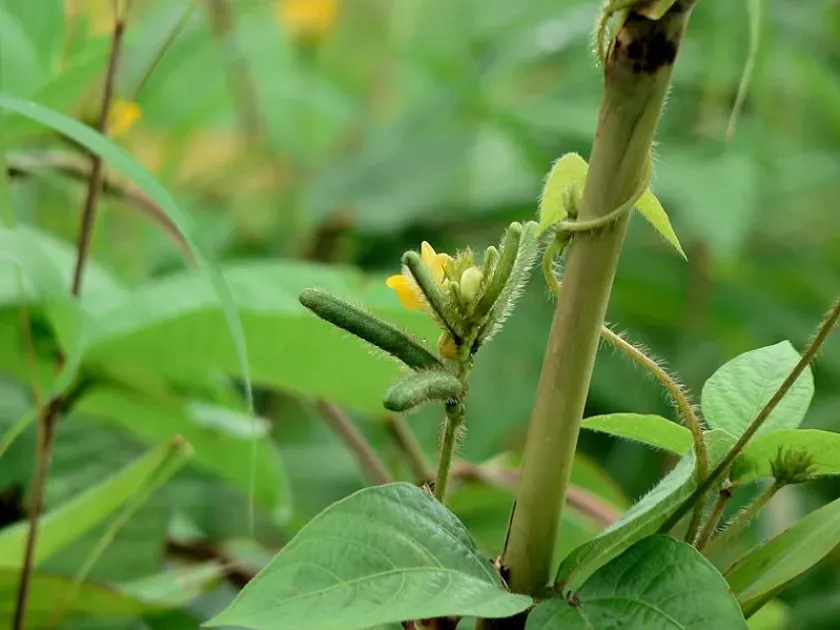
Description
How to tell it apart
Alectra vogelii is an obligate root parasite belonging to the Orobanchaceae family. The plant typically presents as an erect stem, ranging from 10 to 30 cm in height, which can be either simple or branched.
The leaves are small, scale-like, and arranged oppositely along the stem. The plant's color ranges from greenish-yellow to brown, reflecting its limited photosynthetic ability, as it relies heavily on the host for nutrients.
The flowers of Alectra are usually solitary or arranged in a loose, spike-like inflorescence. The corolla is bright yellow or orange, making the plant clearly visible in fields during its peak flowering phase.
The root system is modified into specialized organs called haustoria. These structures penetrate the host's roots, creating a direct anatomical connection that allows the parasite to siphon water, carbohydrates, and minerals.
The seeds are extremely small and produced in large quantities. They can remain viable in the soil seed bank for several years, lying dormant until they detect chemical cues from host roots that trigger germination.
Where it grows
The distribution of Alectra vogelii is primarily concentrated in tropical and subtropical regions of sub-Saharan Africa. It is found in areas where legume cultivation is a staple of agricultural production.
This species is a highly specialized parasite, frequently infesting crops such as cowpea (Vigna unguiculata), groundnuts, soybeans, and other legumes. It thrives in well-drained, fertile soil environments.
Field infestation occurs through the soil, where the seed bank remains dormant until a suitable host root grows nearby, secreting specific signaling compounds known as strigolactones.
The spread of this parasite is often facilitated by the movement of contaminated seeds, agricultural machinery, farm equipment, or through water runoff during heavy rainfall events.
In intensive farming systems that lack proper crop rotation, the population of Alectra vogelii can increase rapidly, posing a severe threat to crop yields and long-term soil productivity.
Harm it causes
The primary damage caused by Alectra vogelii stems from its parasitic nature, as it siphons essential nutrients and water directly from the host's vascular system, leading to stunted growth and developmental delay.
Typical symptoms of infestation include leaf chlorosis, premature wilting, and severe dwarfism. Host plants often appear distressed, losing turgor pressure even when soil moisture levels are adequate.
Significant infestations lead to a drastic reduction in pod and seed production. Under high infestation pressure, many young legume plants may die before they reach the reproductive stage.
Beyond direct resource competition, the parasite weakens the host's defense mechanisms, making it more susceptible to secondary fungal and viral pathogens, further compromising overall harvest quality.
Economic losses in smallholder African farms are often critical, as this parasite can result in yield losses ranging from 80% to 100% in highly susceptible legume varieties.
How to control
Managing Alectra vogelii requires an integrated approach, as most efforts are aimed at depleting the soil seed bank and breaking the parasite's lifecycle.
- Implementing crop rotation strategies with trap crops that stimulate parasite germination without supporting its subsequent attachment.
- Utilizing resistant or tolerant legume cultivars, which remains the most sustainable long-term solution for crop protection.
- Hand-weeding or manual removal of adult plants before they set seed to prevent further accumulation of seeds in the soil.
- Enforcing strict quarantine measures to prevent the movement of contaminated soil or seeds from infested zones.
Chemical control remains difficult, but ongoing research focuses on using synthetic strigolactone analogs to trigger "suicidal" germination of Alectra seeds before the main crop is sown.
Taxonomy
- Latin name
- Alectra vogelii
- Family
- Заразиха
- EPPO code
- AKTVO