
Triumfetta semitriloba
Triumfetta semitriloba
Description
How to tell it apart
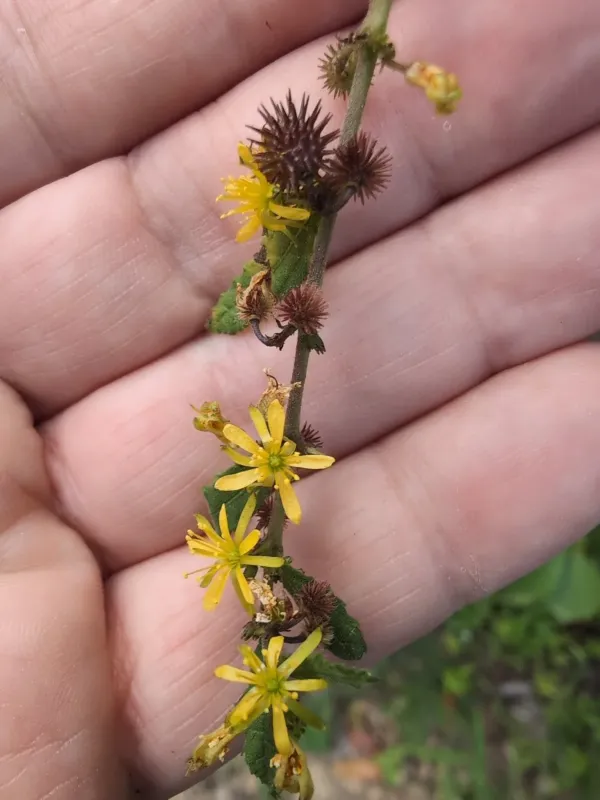
Triumfetta semitriloba, commonly known as bur bush or Sacramento bur, is a perennial herbaceous plant or subshrub belonging to the Malvaceae family. It is recognized as a persistent, invasive weed in many tropical regions.
The plant grows up to 1-2 meters in height. It has erect stems that become woody at the base and are covered in fine, stellate hairs. The leaves are typically three-lobed, giving the plant its specific name, and have serrated margins.
Flowers are small, yellow, and arranged in loose panicles or racemes. The flowering period is extended, allowing the plant to set seeds over a significant part of the growing season.
The fruit is a globular capsule covered with hooked spines. These burs allow the seeds to attach easily to the fur of animals, clothing, and agricultural machinery, facilitating rapid dispersal.
It possesses a deep and resilient root system. Even if the above-ground part is cut, the plant can regenerate from root fragments, making it a difficult weed to eradicate manually.
Where it grows
This species thrives in tropical and subtropical climates worldwide. It is highly adaptable and is often found in disturbed areas, abandoned pastures, and along roadsides.
In agricultural settings, it frequently invades row crops, especially in plantations where perennial weeds are not actively suppressed by intensive tillage.
Triumfetta semitriloba is capable of growing in a variety of soil types, ranging from sandy soils to heavier loams, provided there is sufficient moisture for establishment.
The weed is highly competitive in areas with high rainfall, where it can quickly form dense thickets that dominate the understory of an agricultural field.
Spread is largely facilitated by human activity, including the movement of contaminated equipment and the use of poorly cleaned seeds in planting operations.
Harm it causes
The primary impact of Triumfetta semitriloba is its high competitiveness for natural resources. In dense infestations, it shades out crops, drastically reducing photosynthesis and overall biomass production.
Its deep root system allows it to compete effectively for water and nutrients, which is particularly detrimental during the critical growth stages of crops, leading to significant yield losses.
The hooked fruit (burs) can contaminate harvested products, reducing their market value and necessitating expensive cleaning processes during post-harvest handling.
As a host for various insects and plant pathogens, the weed acts as a reservoir, increasing the risk of disease outbreaks in adjacent cultivated fields.
Due to its high seed production, it creates a persistent seed bank in the soil that can plague farmers for several years, requiring long-term management strategies.
How to control
Mechanical control involves regular deep tillage to disrupt the root system and deplete its energy reserves. Cutting the plant before flowering is essential to stop the seed cycle.
Implementing crop rotation with vigorous, fast-growing cover crops can help shade out the weed and limit its ability to establish in the field.
Chemical control is often necessary for large infestations. Systemic herbicides are the most effective, as they translocate to the deep roots, killing the plant from within.
Integrated Weed Management (IWM) programs, which combine cultural, mechanical, and chemical approaches, are the most successful strategies to minimize the presence of this weed.
- Sanitation of equipment to prevent the transport of seed-laden burs.
- Early detection and manual removal of scattered plants.
- Monitoring field edges to prevent encroachment into crop zones.
Taxonomy
- Latin name
- Triumfetta semitriloba
- Family
- Мальвовые
- EPPO code
- TIUSE