
Sida ulmifolia
Sida ulmifolia
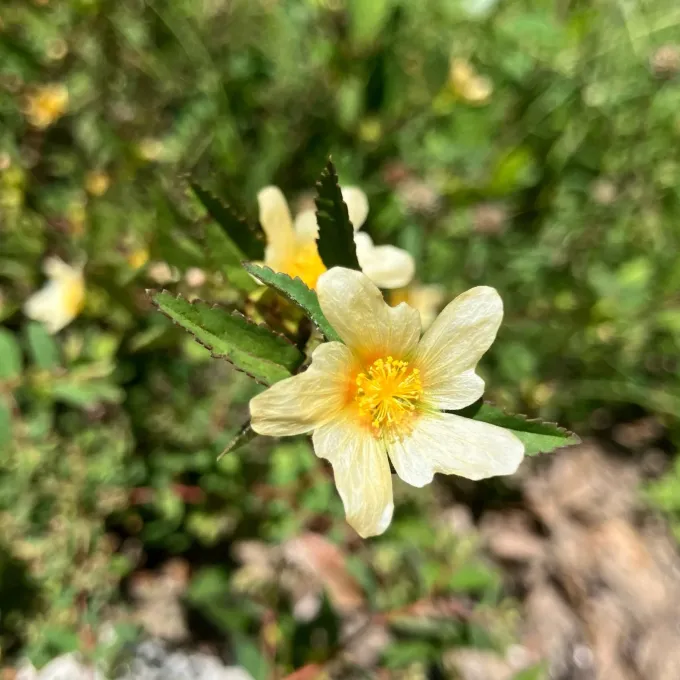
Description
How to tell it apart
Sida ulmifolia is a perennial herbaceous plant or subshrub belonging to the Malvaceae (mallow) family. Its name is derived from the appearance of its leaves, which resemble those of an elm tree.
The plant features a strong taproot system that allows it to survive periods of water scarcity. Its stems are upright, often branched, and can reach heights between 50 and 100 centimeters, covered in fine hairs.
The flowers are typically solitary, situated in the leaf axils, and display a characteristic five-petaled corolla, usually yellow or cream-colored. Pollination is primarily carried out by insects.
Its fruits are schizocarps that split into individual mericarps upon maturation, often equipped with sharp spines. This structure facilitates seed dispersal by wind or by attaching to animal fur and human clothing.
Biologically, it is classified as a perennial weed capable of regeneration from root sprouts, making it highly persistent and difficult to eradicate manually.
Where it grows
Sida ulmifolia is primarily native to tropical and subtropical regions of South and Central America. In recent years, it has become a troublesome weed in intensive farming systems elsewhere.
It prefers sunny environments with well-drained soils. The plant is frequently found in fallow fields, along roadsides, on pastures, and in areas subjected to overgrazing.
In agriculture, it poses a significant threat to row crops such as soybeans, corn, cotton, and sugarcane. Its high adaptability allows it to rapidly colonize any areas left exposed by tillage.
The weed thrives across a wide range of soil acidity levels, allowing it to outcompete cultivated plants even on degraded or nutrient-poor land.
Climate change and increased global trade have facilitated the expansion of its range into temperate zones, where it is increasingly being recognized as a problematic invasive species.
Harm it causes
The primary damage caused by Sida ulmifolia results from intense competition for vital resources: moisture, sunlight, and soil nutrients. It grows rapidly, often suppressing young crop seedlings.
The weed acts as an alternative host for various viral and fungal diseases that affect major crops. Additionally, it serves as a breeding ground for pests that can migrate to cash crops, reducing yield quality.
High population densities of the weed significantly complicate mechanical harvesting operations. The sharp fruit spines and tough stems can damage machinery and contaminate harvested grain, lowering its market value.
If present in fodder crops, the plant's coarse texture makes it poorly digestible for livestock, while the spiny fruit segments can cause physical injury to the animals' mouths.
Economic losses include direct yield reduction, high costs for chemical herbicides, and the labor required for extra cleaning of seeds and harvested produce.
How to control
Mechanical control measures include deep plowing with soil inversion, which disrupts the root system and buries seeds at depths that inhibit germination. Regular inter-row cultivation is highly effective during the growing season.
Systematic mowing before the onset of flowering prevents seed production and exhausts the plant's energy reserves. Crop rotation involving highly competitive cover crops is a recommended strategy to suppress the weed.
Chemical control involves the use of systemic herbicides, particularly those with growth-regulating properties, applied during active growth stages. Proper timing is crucial for achieving consistent results.
To avoid the development of herbicide resistance, it is essential to rotate products with different modes of action. Relying on a single type of chemical treatment often leads to the selection of resistant weed populations.
Field sanitation is a key preventive measure. Cleaning agricultural machinery after operations in infested fields helps prevent the spread of seeds to clean areas, while managing field borders reduces the primary infection source.
Taxonomy
- Latin name
- Sida ulmifolia
- Family
- Мальвовые
- EPPO code
- SIDST